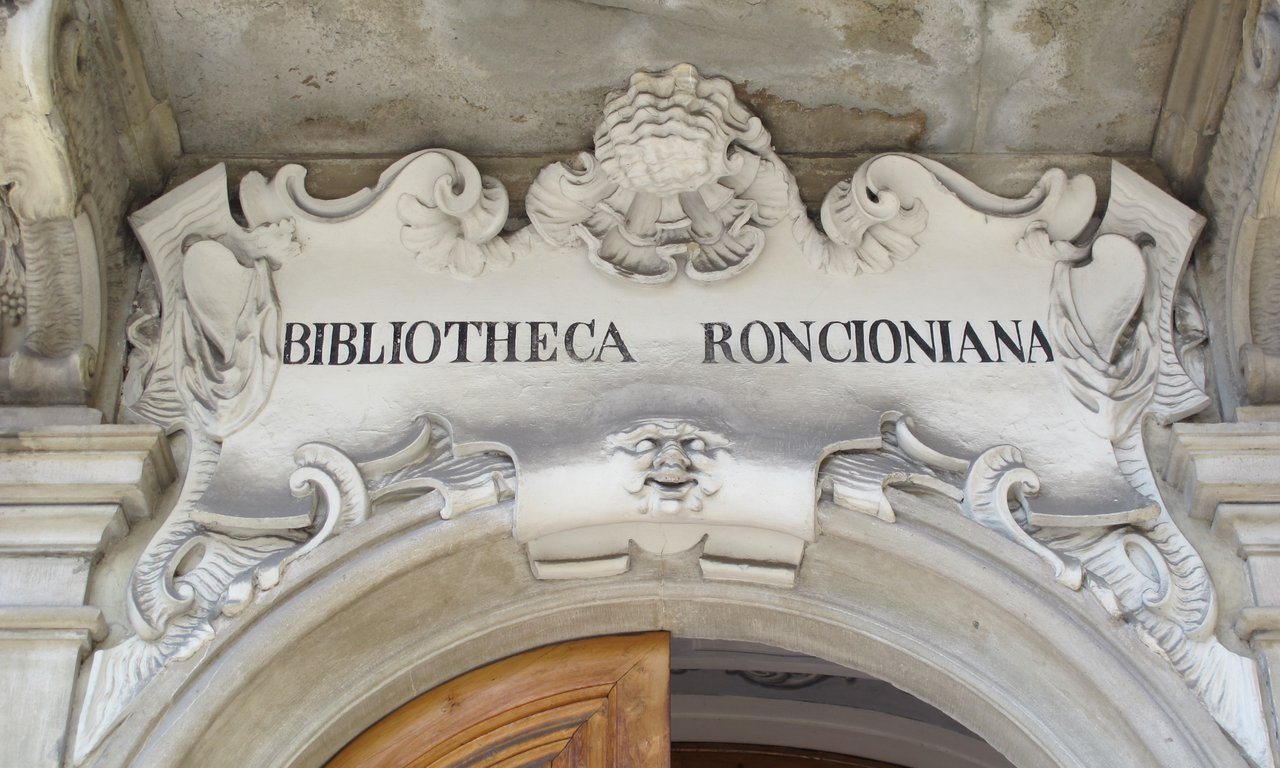
The Roncioniana is the oldest library in Prato. Created according to the wishes of the local nobleman Marco di Emilio Roncioni as specified in his will, it was provisionally opened in 1722. It has been housed in Palazzo Roncioni, in the historic city centre, since 1766.
From the facade overlooking Piazza San Francesco, with its 18th century elegance, through an arched doorway, visitors gain access to the atrium with its beautiful majolica depicting the Archangel Raphael with Tobias, by Andrea della Robbia.
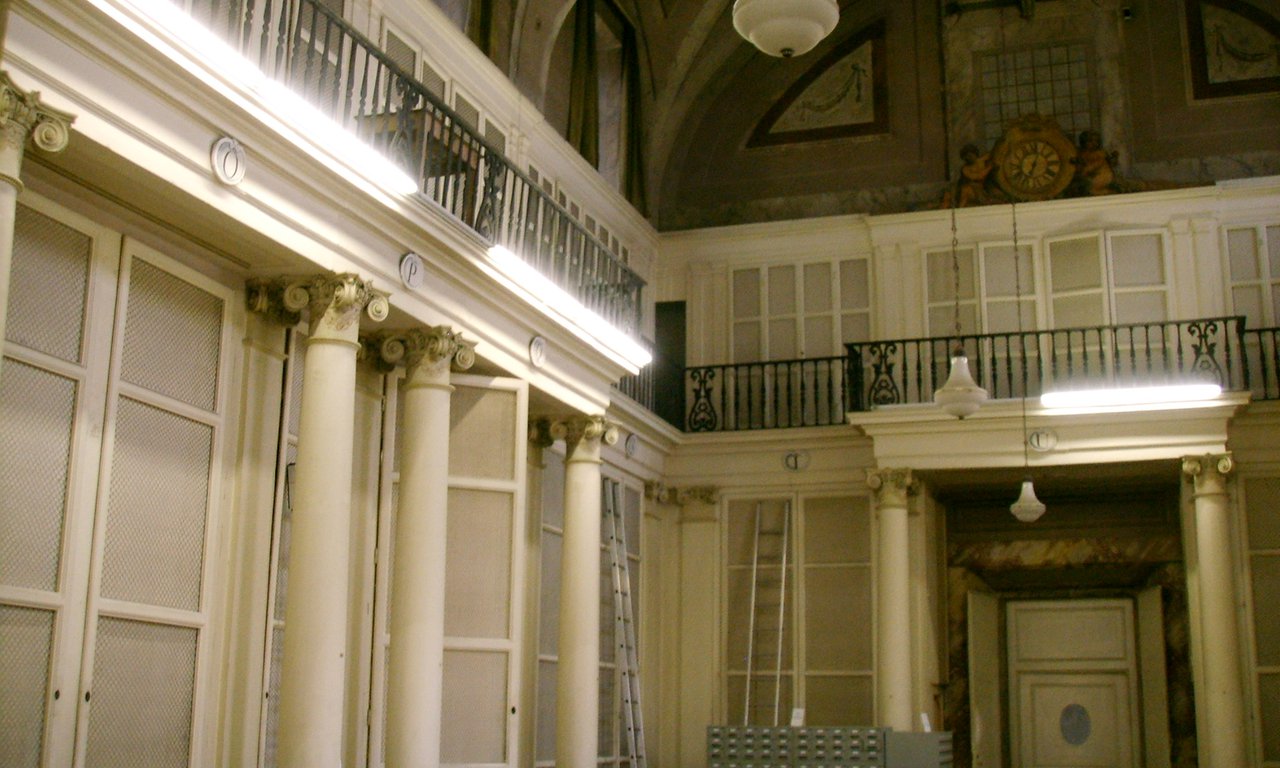
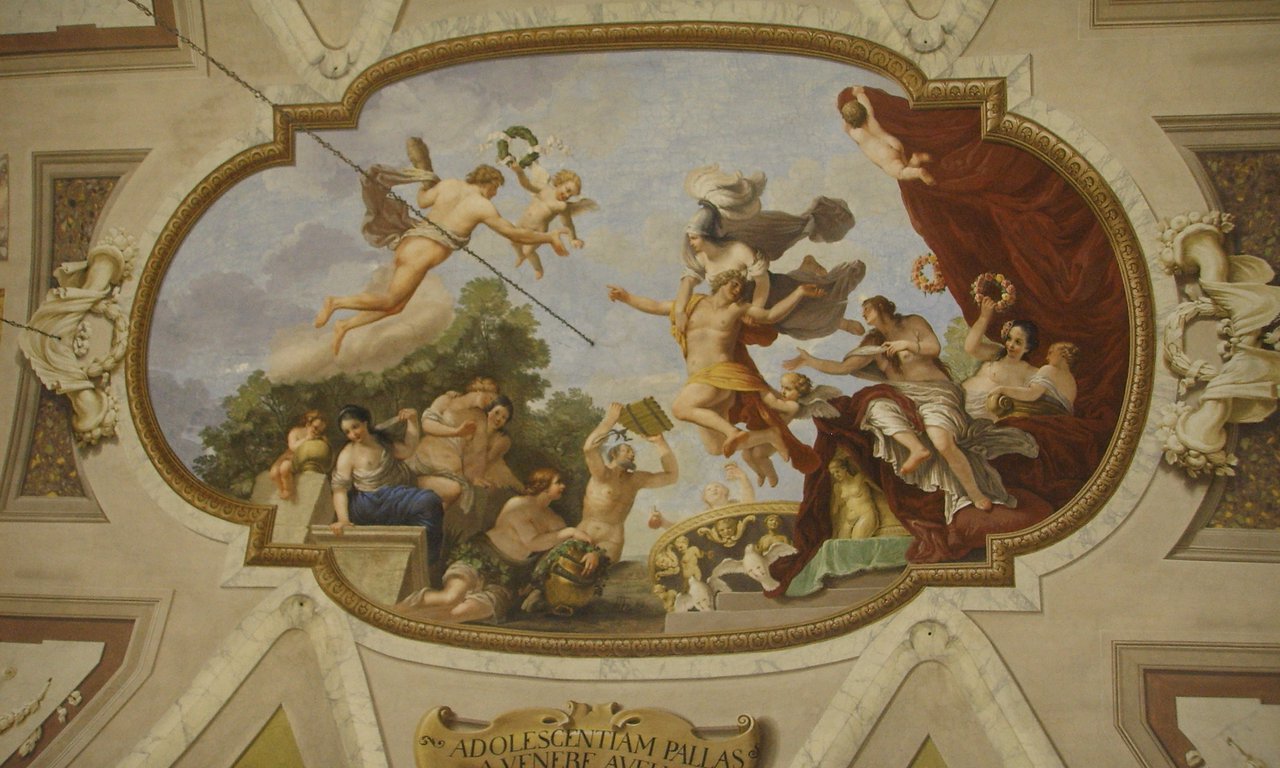
In the large reading room, the centre of the low barrel vault is decorated with a painting by Luigi Catani from 1789, depicting Sloth and Wisdom, after Pietro da Cortona. Still in this room, we can also see two rare globes, one terrestrial (dating to 1541) and the other celestial (dating to 1551), by the geographer and cartographer Mercatore.
The library’s valuable collections also include an important local section including 18th and 19th century manuscripts by local scholars. Among these, those by the writer and philologist Cesare Guasti, are most worthy of note.
The Roncioniana is the oldest library in Prato. Created according to the wishes of the local nobleman Marco di Emilio Roncioni as specified in his will, it was provisionally opened in 1722. It has been housed in Palazzo Roncioni, in the historic city centre, since 1766.
From the facade overlooking Piazza San Francesco, with its 18th century elegance, through an arched doorway, visitors gain access to the atrium with its beautiful majolica depicting the Archangel Raphael with Tobias, by Andrea della Robbia.
In the large reading room, the centre of the low barrel vault is decorated with a painting by Luigi Catani from 1789, depicting Sloth and Wisdom, after Pietro da Cortona. Still in this room, we can also see two rare globes, one terrestrial (dating to 1541) and the other celestial (dating to 1551), by the geographer and cartographer Mercatore.
The library’s valuable collections also include an important local section including 18th and 19th century manuscripts by local scholars. Among these, those by the writer and philologist Cesare Guasti, are most worthy of note.