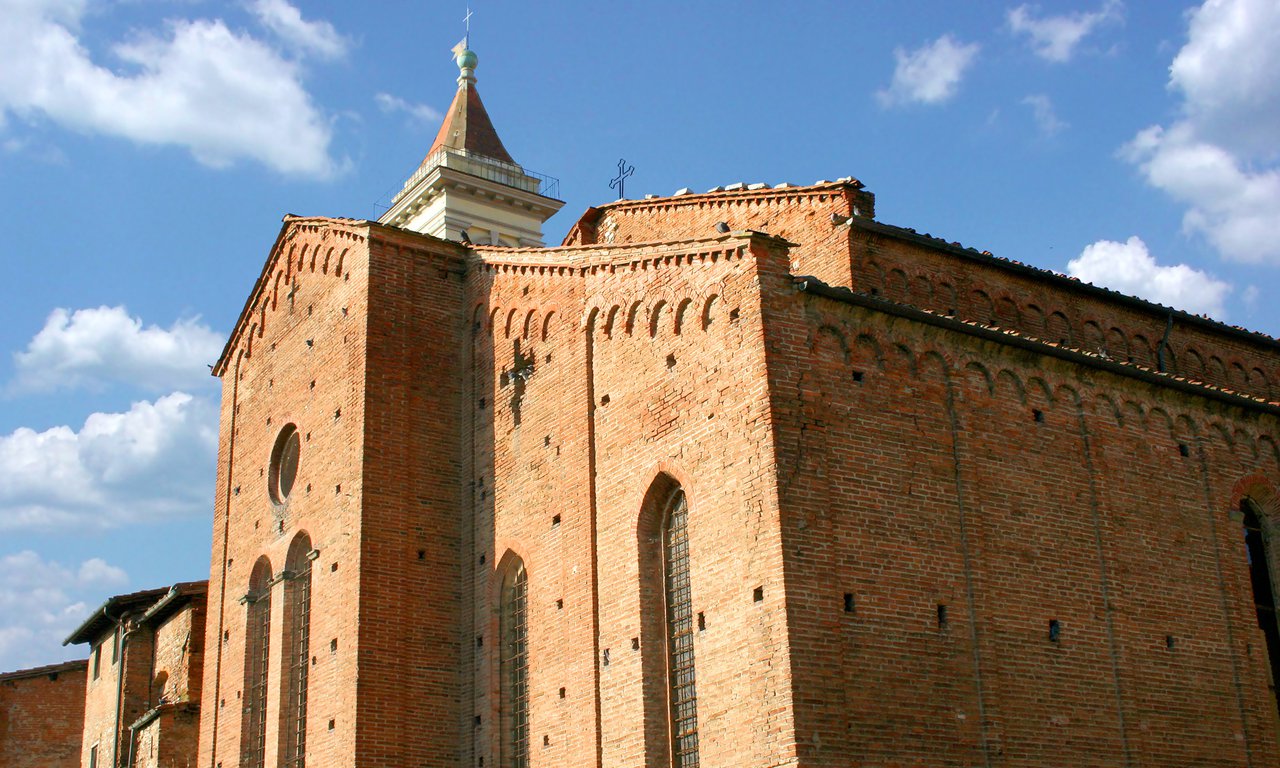
The church of San Francesco was the first religious building in Prato to be almost entirely built in fired brick, with the exception of the basement and the facade, which are in Alberese stone.
Building work on the church began in 1281, and was followed by the sacristy, the chapter house and refectory. The cloister, which was built in the 15th century and is the earliest example of fully Renaissance architecture in the area, leads to the Migliorati Chapel. The facade was completed during the course of the 1400s, probably by Giuliano da Sangallo, while the bell-tower dates to 1798-1801.
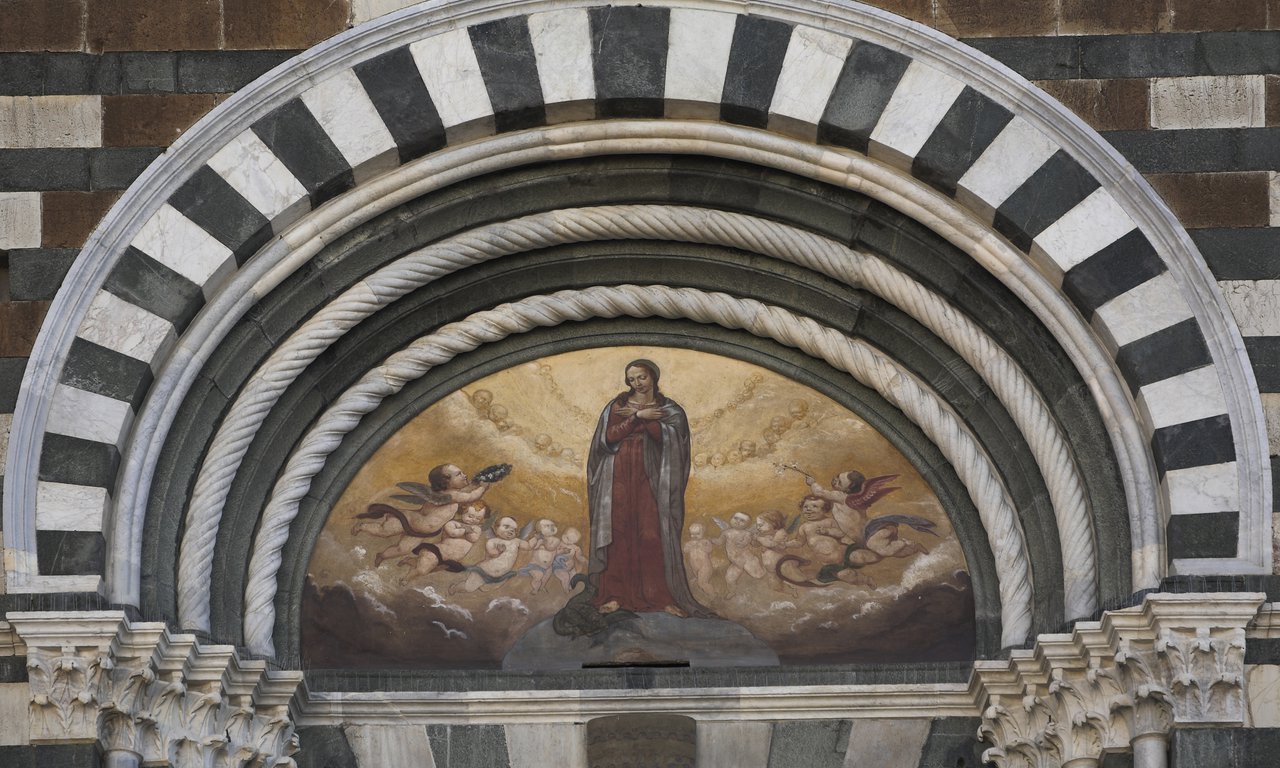
The facade is built in the Romanesque-Gothic style, with the two-tone use of Alberese and green Serpentino stone. At the centre of the tympanum we can see a stucco depicting Saint Francis receiving the stigmata, by Andrea della Robbia.
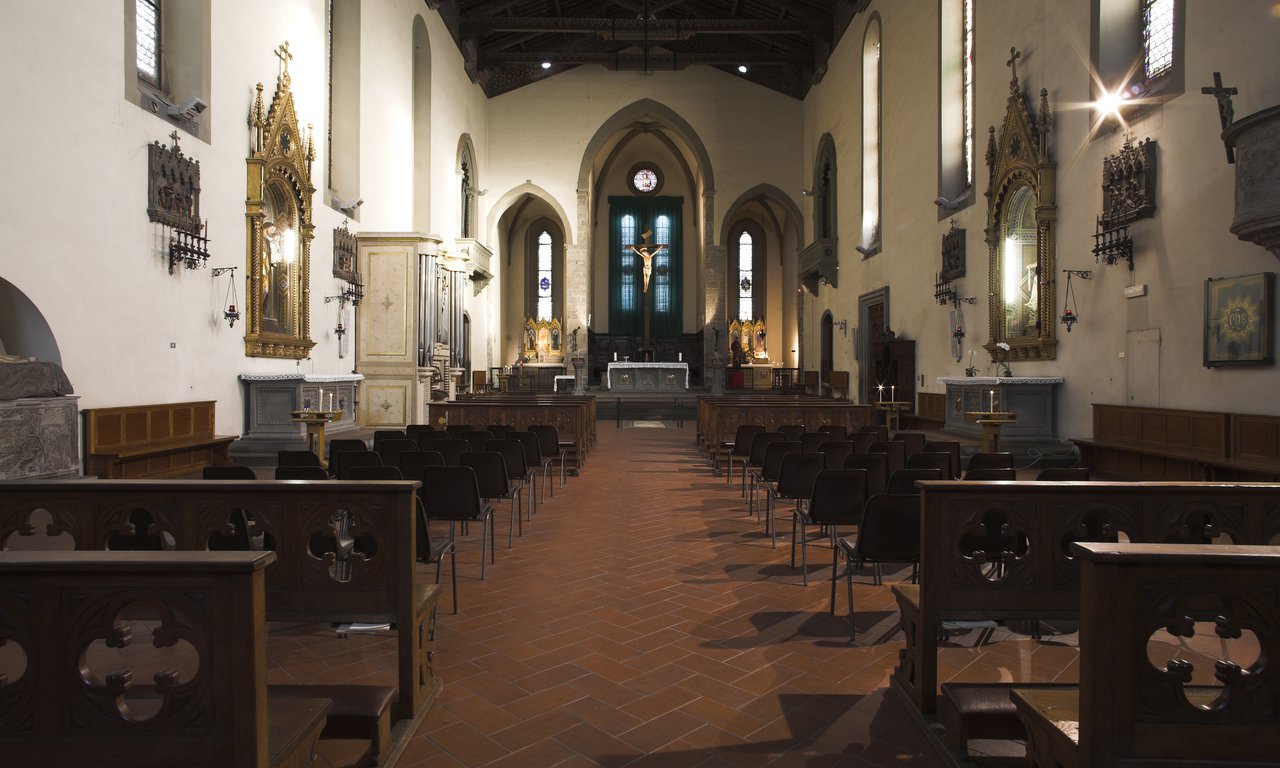
Inside, the wooden truss ceiling with pictorial decoration above the nave was restored in the early 1900s. A sepulchral monument to Geminiano Inghirami attributable to Pasquino da Montepulciano is worthy of note. On the floor in front of the high altar we can see the white marble tombstone of the local merchant Francesco Datini by Niccolò di Piero Lamberti dating to 1411. The 14th century crucifix in polychrome wood above the high altar was donated by Datini.
On the south side of the cloister we can see the entrance to the convent which still preserves several beautiful 14th century rooms, despite having been restored in the 1600s and enlarged during the 1800 to 1900s.
The church of San Francesco was the first religious building in Prato to be almost entirely built in fired brick, with the exception of the basement and the facade, which are in Alberese stone.
Building work on the church began in 1281, and was followed by the sacristy, the chapter house and refectory. The cloister, which was built in the 15th century and is the earliest example of fully Renaissance architecture in the area, leads to the Migliorati Chapel. The facade was completed during the course of the 1400s, probably by Giuliano da Sangallo, while the bell-tower dates to 1798-1801.
The facade is built in the Romanesque-Gothic style, with the two-tone use of Alberese and green Serpentino stone. At the centre of the tympanum we can see a stucco depicting Saint Francis receiving the stigmata, by Andrea della Robbia.
Inside, the wooden truss ceiling with pictorial decoration above the nave was restored in the early 1900s. A sepulchral monument to Geminiano Inghirami attributable to Pasquino da Montepulciano is worthy of note. On the floor in front of the high altar we can see the white marble tombstone of the local merchant Francesco Datini by Niccolò di Piero Lamberti dating to 1411. The 14th century crucifix in polychrome wood above the high altar was donated by Datini.
On the south side of the cloister we can see the entrance to the convent which still preserves several beautiful 14th century rooms, despite having been restored in the 1600s and enlarged during the 1800 to 1900s.