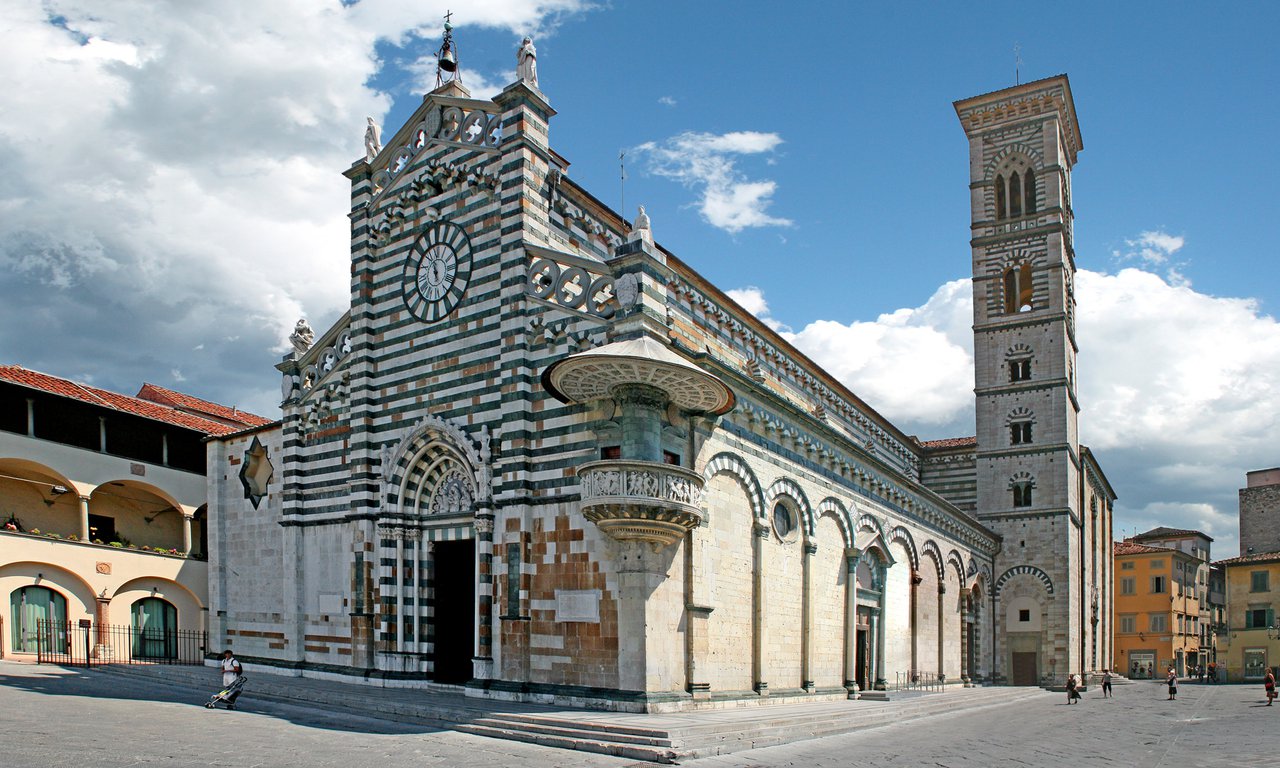
The St. Stephen's Cathedral dominates the large Piazza del Duomo and is a splendid example of Romanesque-Gothic architecture, characterized by two distinct tone of green marble and light “alberese”, typical materials of Prato. Particularly original, the bell tower of the beginning of 1200, completed around 1356 with the addition of a belfry in triple-lancet windows. The present facade, built between 1385 and 1457, was superimposed on the original Romanesque one by Guidetto da Como.
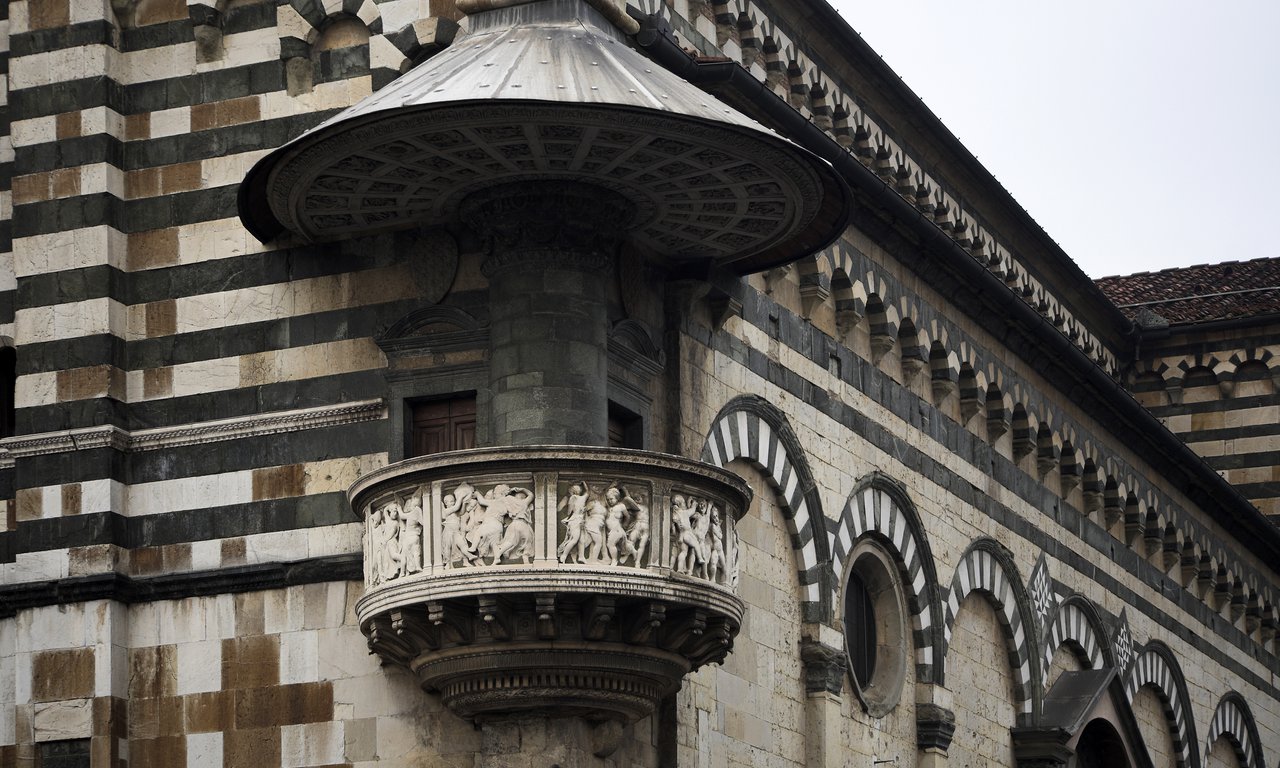
An interpsace between the two facades, still permtis to get to the extraordinary pulpit, a masterpiece by Donatello and Michelozzo (1428-1438), from which the Sacra Cintola is still shown to the faithfuls in the solemn days.
Arrived in Prato in 1141, the Sacra Cintola was the subject of an extraordinary veneration, becoming the hub of the artistic events of the city, starting from the Duomo. Agnolo Gaddi painted the stories of the Belt, (1392-1395) in the chapel that still houses it; Paolo Uccello frescoed the amazing stories of the Virgin in the Chapel of the Assumption (1435-1436); Maso di Bartolomeo realized the beautiful bronze railing of the chapel and the candlestick (1438-1440). Filippo Lippi painted the stories of St. Stephen and St. John the Baptist in the Main Chapel, a masterpiece of the Italian Renaissance (1452-1465 ).
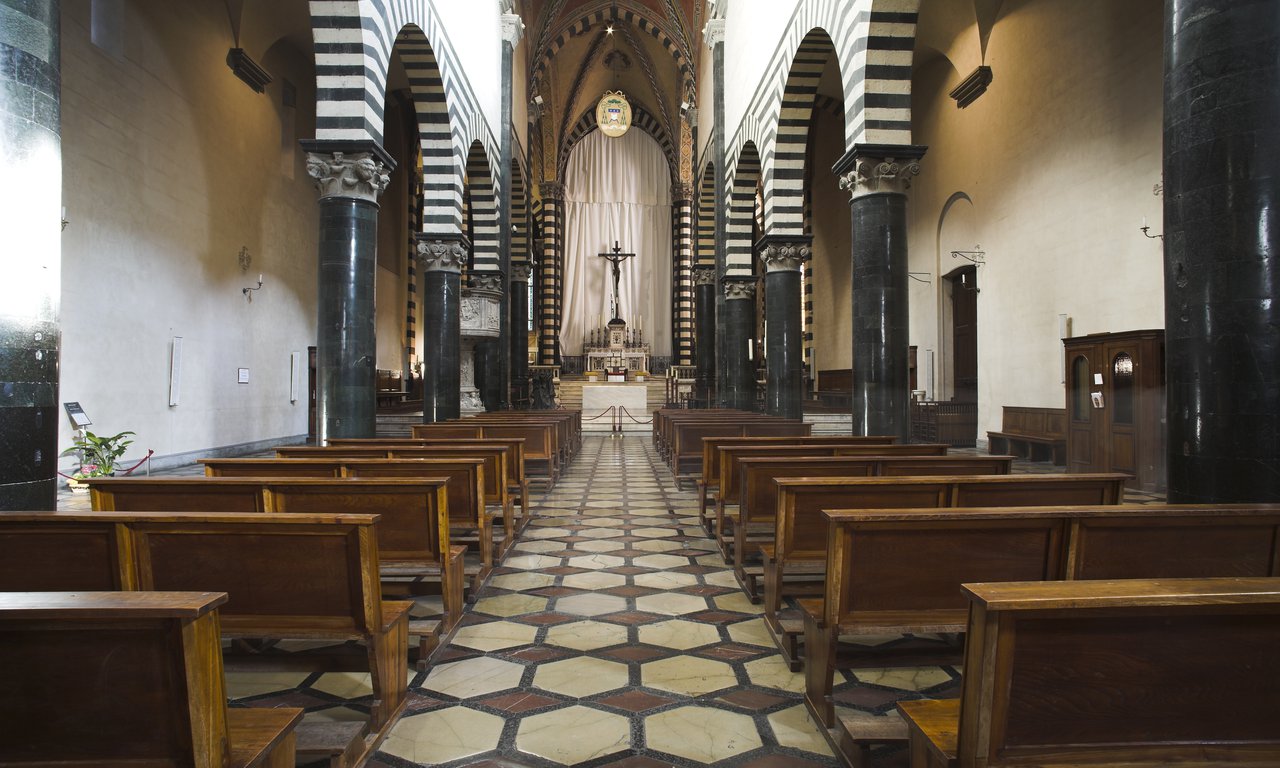
Other works are worthy of interest in the cathedral including the sweet Madonna and Child (1301) and the small crucifix by Giovanni Pisano, and the original cup-shaped pulpit by Pasquino da Montepulciano, Mino da Fiesole and Antonio Rossellino (1469-73), the bezel glazed terracotta by Andrea della Robbia (1489) in the central portal of the facade, the Madonna dell’Olivo (1480) by da Maiano brothers, the marble altar (2000), bronze candlestick, and the ambo (2001) by Robert Morris, and the nineteenth-century frescoes in Vinaccesi Chapel by local artist Alessandro Franchi.
The St. Stephen's Cathedral dominates the large Piazza del Duomo and is a splendid example of Romanesque-Gothic architecture, characterized by two distinct tone of green marble and light “alberese”, typical materials of Prato. Particularly original, the bell tower of the beginning of 1200, completed around 1356 with the addition of a belfry in triple-lancet windows. The present facade, built between 1385 and 1457, was superimposed on the original Romanesque one by Guidetto da Como.
An interpsace between the two facades, still permtis to get to the extraordinary pulpit, a masterpiece by Donatello and Michelozzo (1428-1438), from which the Sacra Cintola is still shown to the faithfuls in the solemn days.
Arrived in Prato in 1141, the Sacra Cintola was the subject of an extraordinary veneration, becoming the hub of the artistic events of the city, starting from the Duomo. Agnolo Gaddi painted the stories of the Belt, (1392-1395) in the chapel that still houses it; Paolo Uccello frescoed the amazing stories of the Virgin in the Chapel of the Assumption (1435-1436); Maso di Bartolomeo realized the beautiful bronze railing of the chapel and the candlestick (1438-1440). Filippo Lippi painted the stories of St. Stephen and St. John the Baptist in the Main Chapel, a masterpiece of the Italian Renaissance (1452-1465 ).
Other works are worthy of interest in the cathedral including the sweet Madonna and Child (1301) and the small crucifix by Giovanni Pisano, and the original cup-shaped pulpit by Pasquino da Montepulciano, Mino da Fiesole and Antonio Rossellino (1469-73), the bezel glazed terracotta by Andrea della Robbia (1489) in the central portal of the facade, the Madonna dell’Olivo (1480) by da Maiano brothers, the marble altar (2000), bronze candlestick, and the ambo (2001) by Robert Morris, and the nineteenth-century frescoes in Vinaccesi Chapel by local artist Alessandro Franchi.