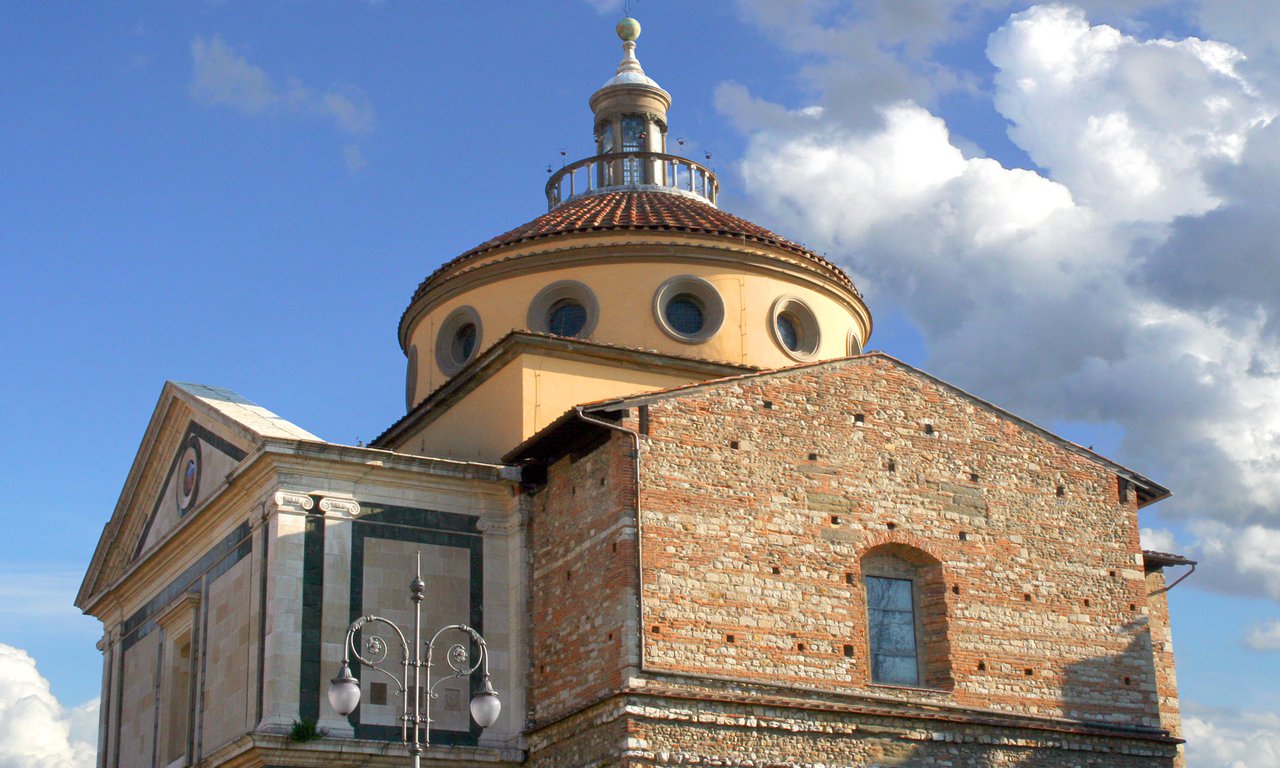
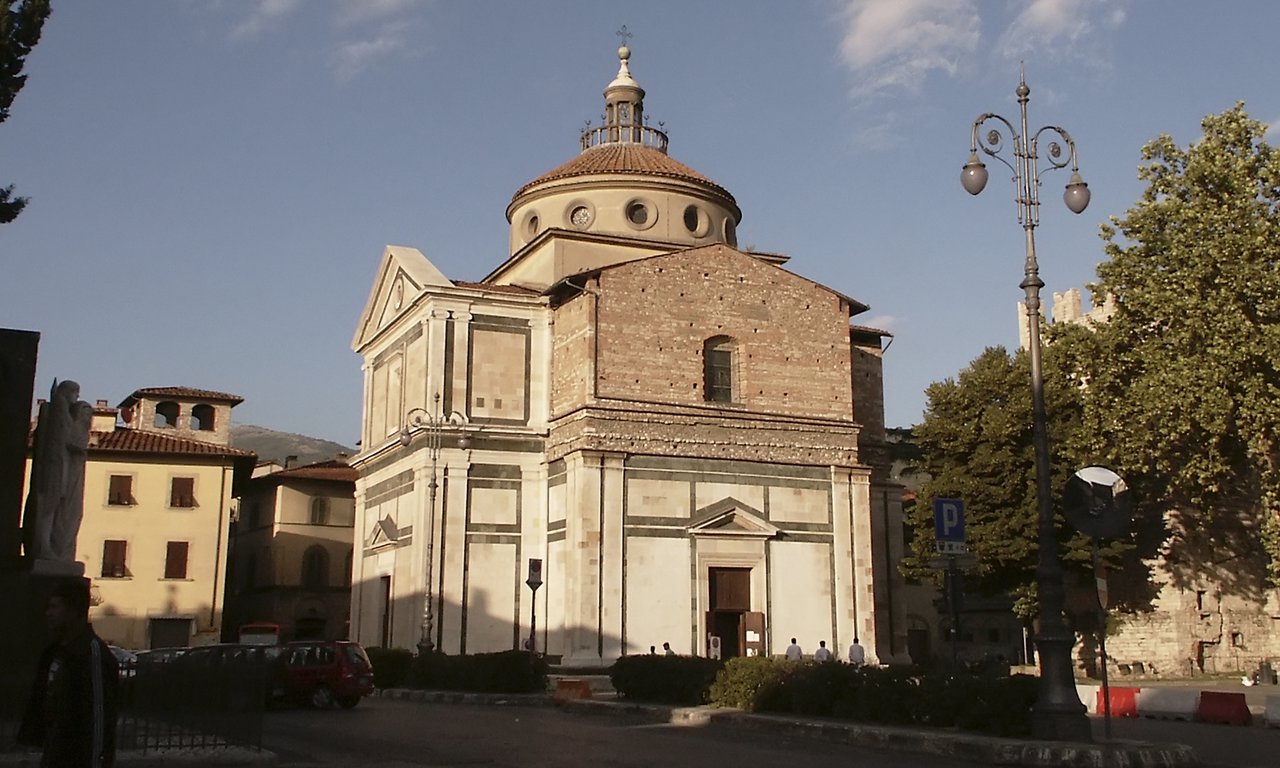
The Basilica of Santa Maria delle Carceri was built alongside the Emperor’s Castle. The construction of the sanctuary was brought about by various prodigious events which took place in 1484 surrounding an image of the Madonna and Child, which was painted on the outside of the ancient Carcere delle Stinche prison.
The structure, which was designed by Giuliano da Sangallo and whose interior was completed in 1492, is built on the Greek Cross plan, a shape in which the central plan, which is symbol of cosmic harmony, is sublimated in the cross, the Christian emblem of redemption.
The low base on which the church rests, and the incomplete facade, display the traditional two-tone interplay of Alberese and green Serpentino stone.
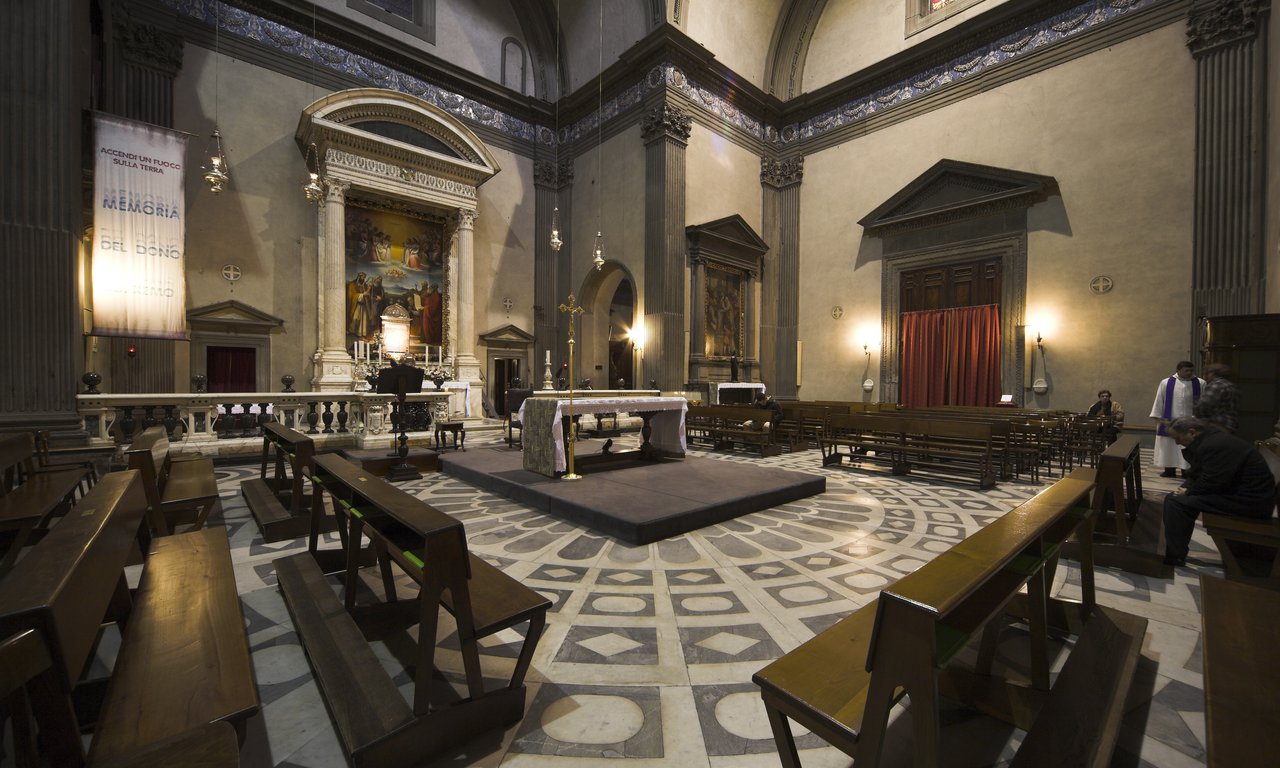
Inside, the purity and simplicity of the interplay between the parts represents the most accomplished example of a temple built on a Greek-cross plan of the Renaissance.
On the pilasters we can see a trabeation embellished with a frieze of festoons in white and blue glazed terracotta by Andrea della Robbia, who was also responsible for the four tondos depicting the Evangelists, situated in the pendentives of the cupola.
The ends of the arms are enriched by four stained glass windows dating to 1491 on a design attributed to Domenico Ghirlandaio, depicting the Annunciation, the Nativity, Our Lady of the Assumption and the Visitation.
On the high altar is the miraculous 14th century fresco depicting the Madonna and Child with Saints Leonard and Stephen, painted on the external wall of the ancient 13th century prison.
The Basilica of Santa Maria delle Carceri was built alongside the Emperor’s Castle. The construction of the sanctuary was brought about by various prodigious events which took place in 1484 surrounding an image of the Madonna and Child, which was painted on the outside of the ancient Carcere delle Stinche prison.
The structure, which was designed by Giuliano da Sangallo and whose interior was completed in 1492, is built on the Greek Cross plan, a shape in which the central plan, which is symbol of cosmic harmony, is sublimated in the cross, the Christian emblem of redemption.
The low base on which the church rests, and the incomplete facade, display the traditional two-tone interplay of Alberese and green Serpentino stone.
Inside, the purity and simplicity of the interplay between the parts represents the most accomplished example of a temple built on a Greek-cross plan of the Renaissance.
On the pilasters we can see a trabeation embellished with a frieze of festoons in white and blue glazed terracotta by Andrea della Robbia, who was also responsible for the four tondos depicting the Evangelists, situated in the pendentives of the cupola.
The ends of the arms are enriched by four stained glass windows dating to 1491 on a design attributed to Domenico Ghirlandaio, depicting the Annunciation, the Nativity, Our Lady of the Assumption and the Visitation.
On the high altar is the miraculous 14th century fresco depicting the Madonna and Child with Saints Leonard and Stephen, painted on the external wall of the ancient 13th century prison.