The vast area of piazza Mercatale probably originally constituted part of the gravel bed of the Bisenzio river, which was subsequently diverted northwards. Ever since the 12th century it was an area of market and exchange, before hosting the September Fair, the annual merchants’ gathering for the occasion of the solemn display of the relic of the Sacred Belt or Sacra Cintola.
The Carmine Convent was built on the square in 1316, the only building of merit in a succession of modest dwellings and shops fronted by loggias that would have been alive with the bustle of artisans working.
The textile pullers for the Arte della Lana Wool Guild built in the centre of the square in 1531 were subsequently demolished in 1783 and rebuilt along the city walls on a design by Francesco Valentini. These were in turn substituted by the Casa del Fascio in 1930-1932, on a project by Brunetto Chiaramonti.
The treed area, which was created in 1926, replaced an oval lawn surrounded by benches and pilasters, which was designed by Giuseppe Valentini and used during the 1800s for horse racing.
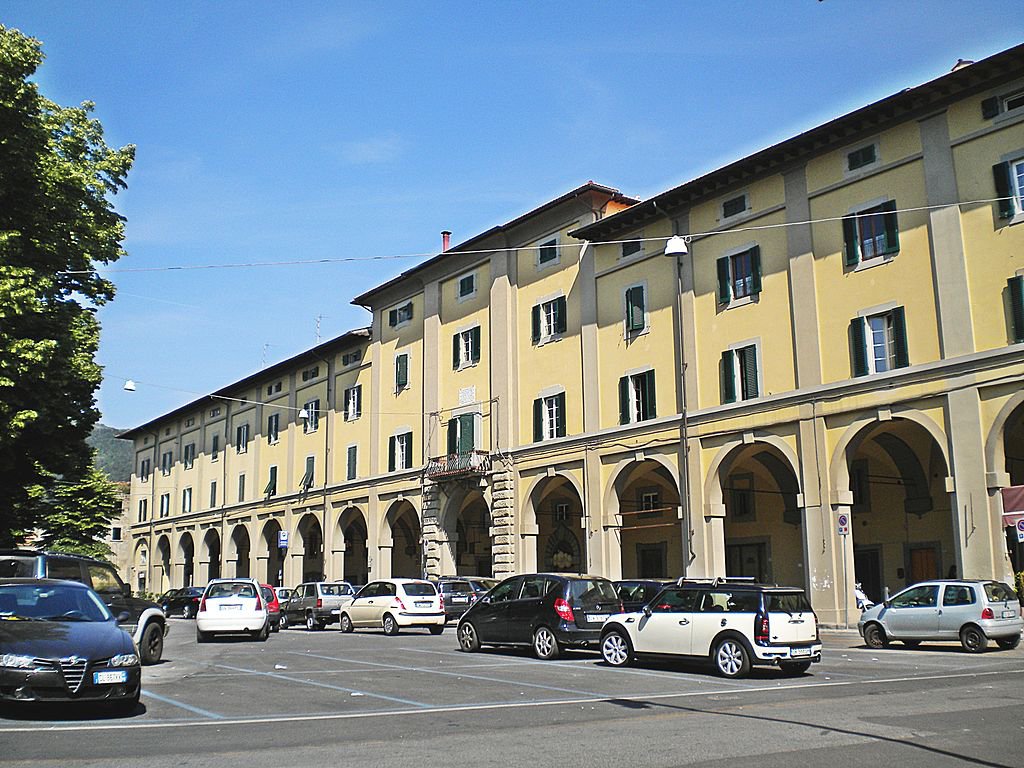
On the eastern side we can see the complex of Case Nuove or ‘New Houses’, an interesting example of 17th century council housing. The central part, or so-called ‘palazzotto’, was created between 1689 and 1695 on a design by Giovan Battista Foggini. Between 1689 and 1703 the ‘palazzotto’ was handed over to the Jesuits, who turned it into a temporary seat of the Collegio Cicognini. The building subsequently housed the Conservatorio delle Pericolanti, the Bishop’s Seminary, the residence of Spanish troops seconded to Prato and finally Lorraine veterans. The dwellings only passed into private hands during the second half of the 1800s.
The vast area of piazza Mercatale probably originally constituted part of the gravel bed of the Bisenzio river, which was subsequently diverted northwards. Ever since the 12th century it was an area of market and exchange, before hosting the September Fair, the annual merchants’ gathering for the occasion of the solemn display of the relic of the Sacred Belt or Sacra Cintola.
The Carmine Convent was built on the square in 1316, the only building of merit in a succession of modest dwellings and shops fronted by loggias that would have been alive with the bustle of artisans working.
The textile pullers for the Arte della Lana Wool Guild built in the centre of the square in 1531 were subsequently demolished in 1783 and rebuilt along the city walls on a design by Francesco Valentini. These were in turn substituted by the Casa del Fascio in 1930-1932, on a project by Brunetto Chiaramonti.
The treed area, which was created in 1926, replaced an oval lawn surrounded by benches and pilasters, which was designed by Giuseppe Valentini and used during the 1800s for horse racing.
On the eastern side we can see the complex of Case Nuove or ‘New Houses’, an interesting example of 17th century council housing. The central part, or so-called ‘palazzotto’, was created between 1689 and 1695 on a design by Giovan Battista Foggini. Between 1689 and 1703 the ‘palazzotto’ was handed over to the Jesuits, who turned it into a temporary seat of the Collegio Cicognini. The building subsequently housed the Conservatorio delle Pericolanti, the Bishop’s Seminary, the residence of Spanish troops seconded to Prato and finally Lorraine veterans. The dwellings only passed into private hands during the second half of the 1800s.