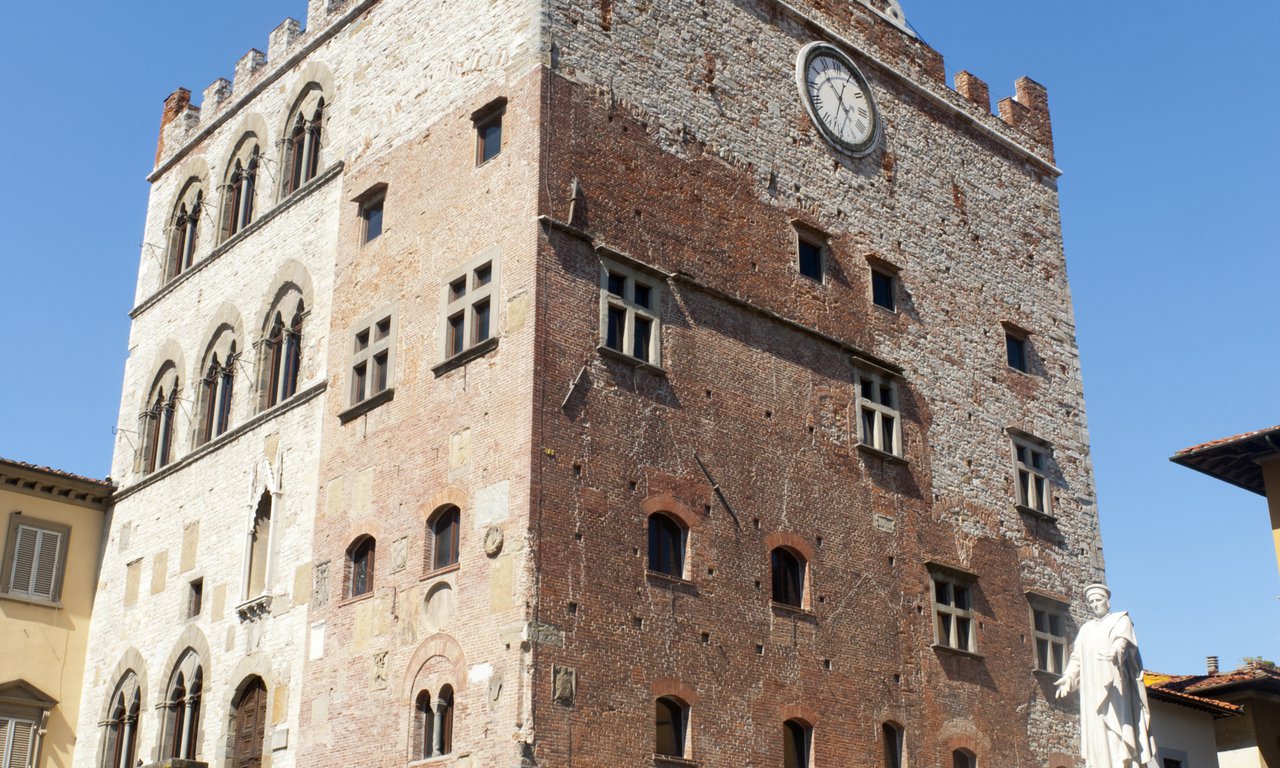
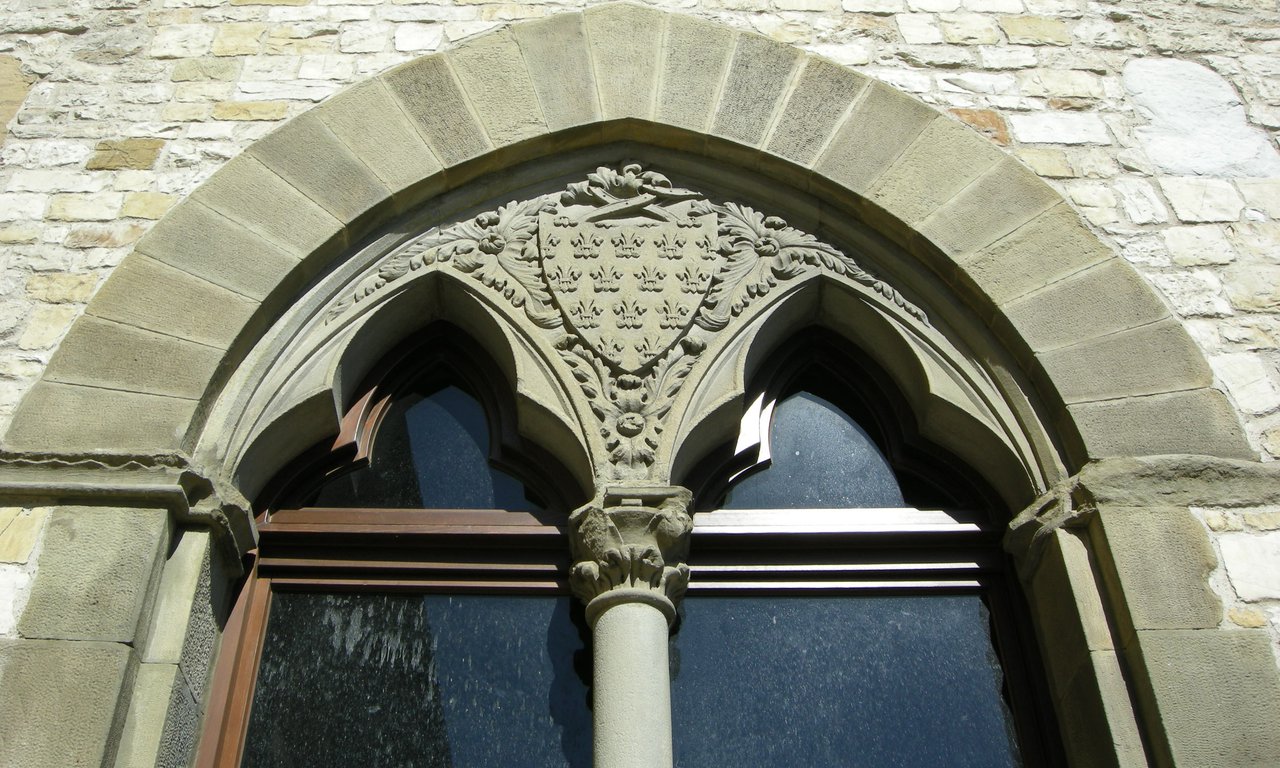
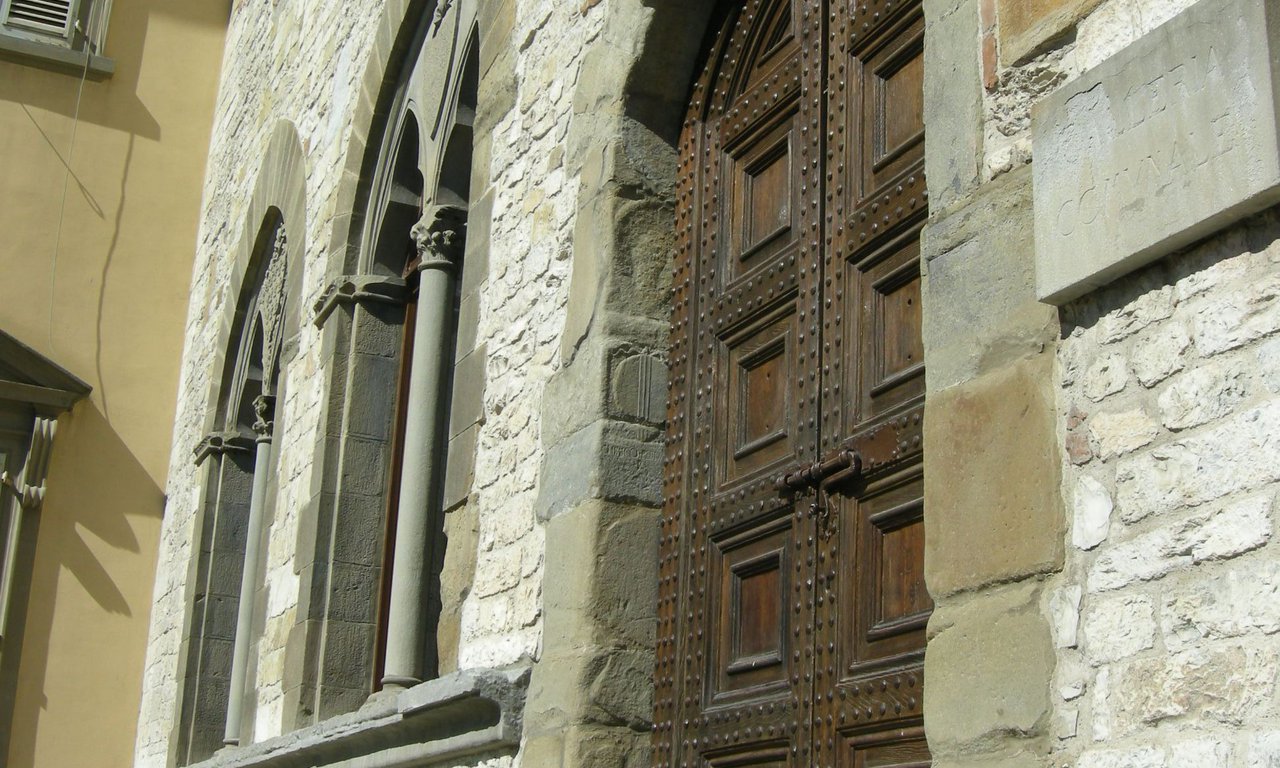
Austere and imposing, Palazzo Pretorio dominates Prato’s Piazza del Comune as a silent witness to the political, civil and military history of the city for more than eight hundred years. Today, its appearance tells us about his long and troubled history, through the changing architectural styles and continuous remodelling of its structure.
The Palace was built as a prison, and seat of the municipal and foreign courts at the end of the thirteenth century. His role radically changed in the eighteenth century, when the halls became administrative offices of the Grand Duchy of Tuscany, adapting to the needs of a modern state. In the mid-nineteenth century, government offices moved out, and the Palace was abandoned in utmost negligence, being even threatened with demolition. Luckily enough, a long restoration was then preferred, that lasted until the early twenties of the twentieth century, when the external, stone staircase was rebuilt and the façade took its present shape. Meanwhile, in 1912, the new seat of the Museum was inaugurated in the halls of the Palazzo.
In 1998 the artworks preserved in the Museum temporarily left the building to make room for an overall restoration and functional adaptation. The major exhibition ‘From Donatello to Lippi. Officina Pratese’, September 2013, celebrates the end of the restoring session and inaugurates the long-awaited reopening of the Museum, with a flexible and innovative setting, able to enhance the beauty of its halls and frescoes, and the masterpieces of the city collections.
Austere and imposing, Palazzo Pretorio dominates Prato’s Piazza del Comune as a silent witness to the political, civil and military history of the city for more than eight hundred years. Today, its appearance tells us about his long and troubled history, through the changing architectural styles and continuous remodelling of its structure.
The Palace was built as a prison, and seat of the municipal and foreign courts at the end of the thirteenth century. His role radically changed in the eighteenth century, when the halls became administrative offices of the Grand Duchy of Tuscany, adapting to the needs of a modern state. In the mid-nineteenth century, government offices moved out, and the Palace was abandoned in utmost negligence, being even threatened with demolition. Luckily enough, a long restoration was then preferred, that lasted until the early twenties of the twentieth century, when the external, stone staircase was rebuilt and the façade took its present shape. Meanwhile, in 1912, the new seat of the Museum was inaugurated in the halls of the Palazzo.
In 1998 the artworks preserved in the Museum temporarily left the building to make room for an overall restoration and functional adaptation. The major exhibition ‘From Donatello to Lippi. Officina Pratese’, September 2013, celebrates the end of the restoring session and inaugurates the long-awaited reopening of the Museum, with a flexible and innovative setting, able to enhance the beauty of its halls and frescoes, and the masterpieces of the city collections.