The merchant Francesco di Marco Datini, (Prato c.1335-1410) commissioned the construction of the palazzo upon his return from Avignon. Works commenced in 1383, probably on a project by Lorenzo di Filippo. The merchant’s home was the richest and most lavish in Prato at the time, and was renowned to such a degree as to be used by the Council as its representative seat for hosting prestigious guests.
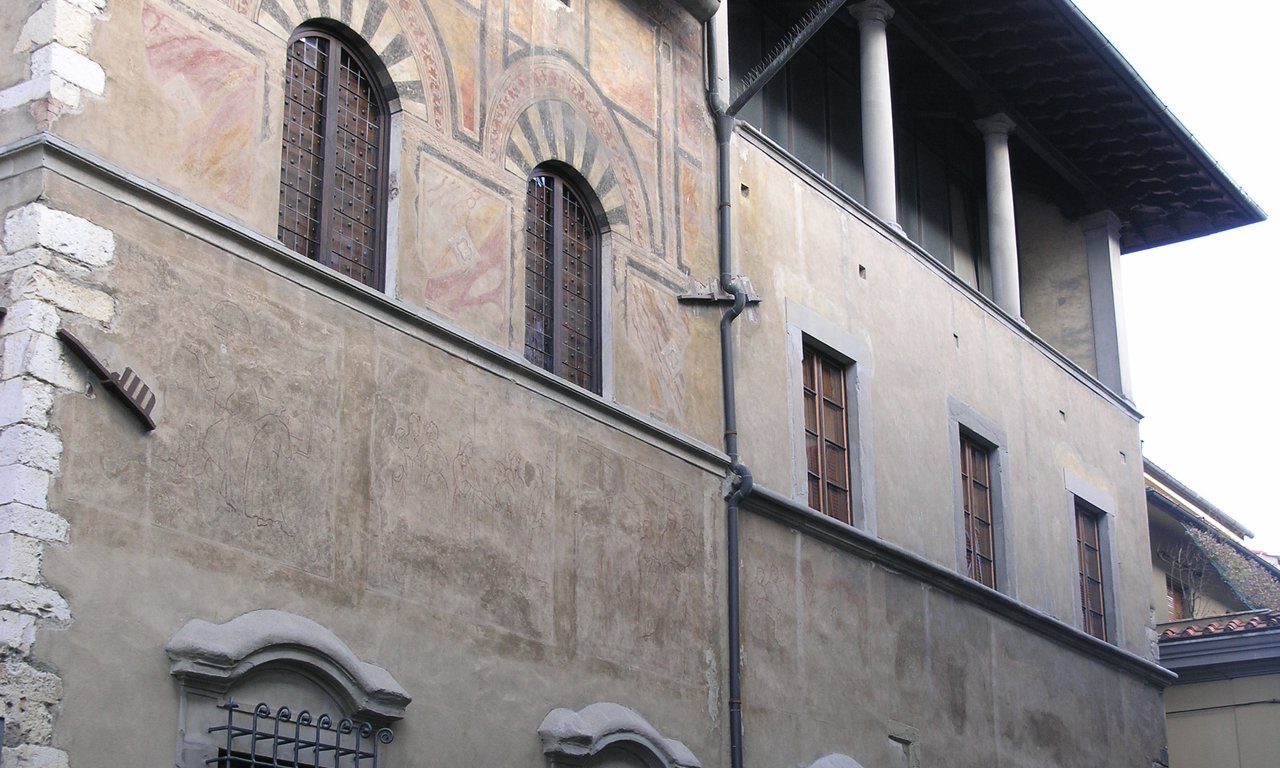
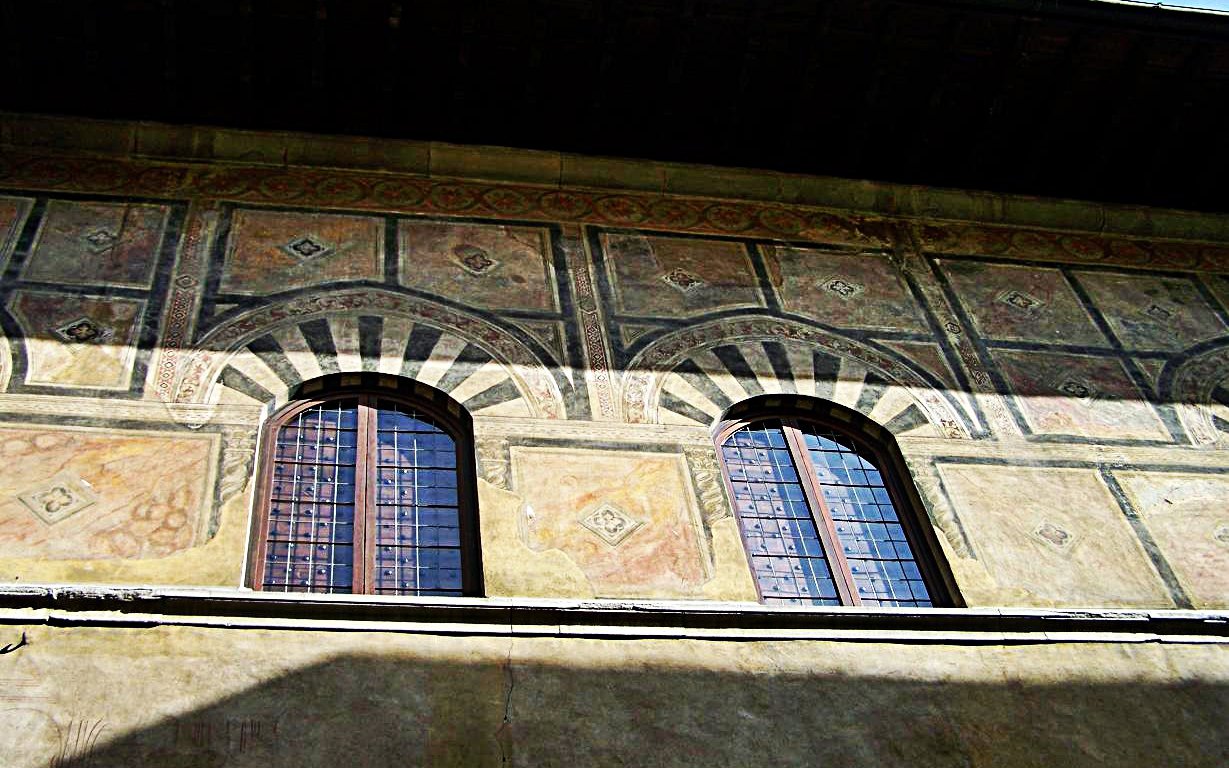
The palazzo is characterised by lavish pictorial decoration which embellished the internal rooms as well as the facade. After the merchant’s death the palazzo’s exterior was frescoed with scenes from Datìni’s life, as exemples of virtue and industry.
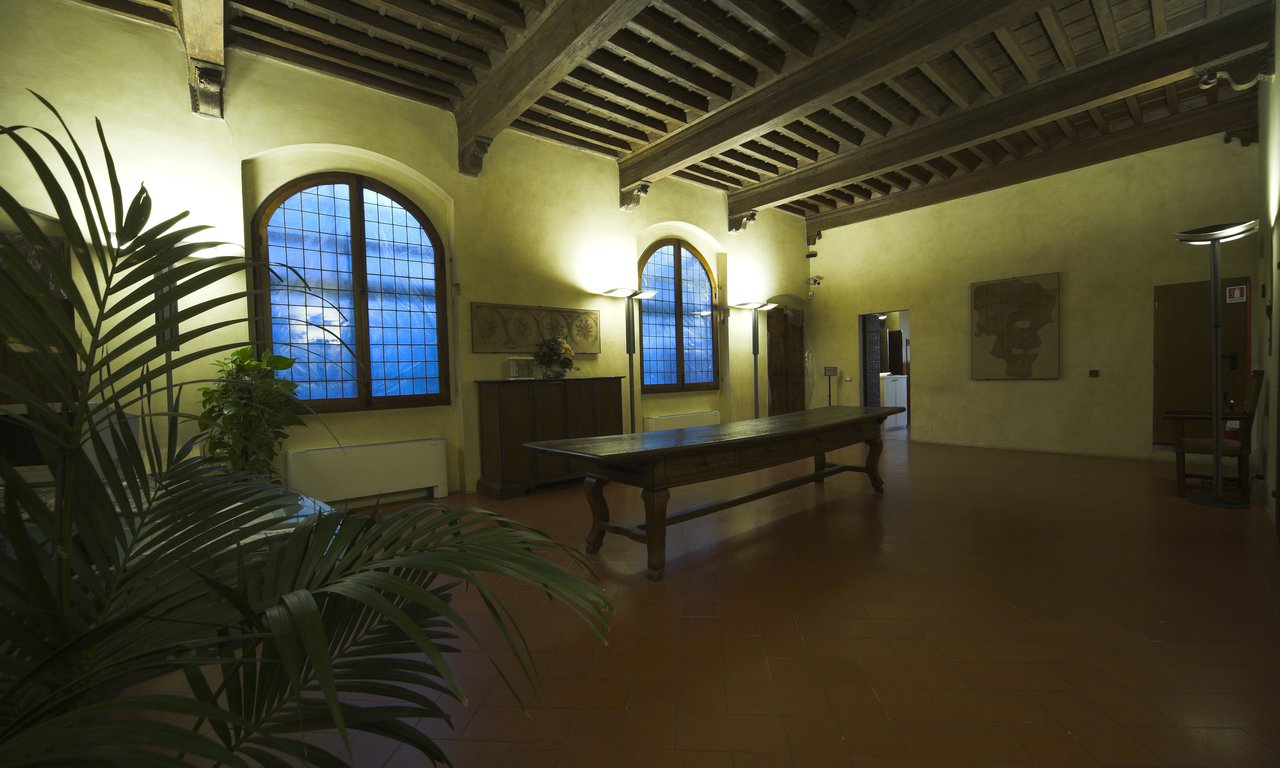
The most lavishly decorated rooms are situated on the ground floor, as can be seen in the lily motif in the main corridor, the ‘audience’ room, with its Proto-Renaissance barrel vault decorated with lunettes frescoed by the workshop of Agnolo Gaddi. In the ‘sala dello scrittoio’ or ‘bureau room’, we can see remnants of decoration depicting a dense wood populated by a large number of wild animals and rare plants, by Agnolo Gaddi and Bartolomeo di Bertozzo. The courtyard and loggia were frescoed in 1391 by Niccolò Gerini and his workshop with allegorical depictions of vices and virtues.
The traces of ten panels and the copies of some sinopias are all that remains of the pictorial cycle once decorating the facade; the extremely fragmentary originals are exhibited on the first floor of the State Archives, which also houses the precious Datini Archive.
The Archive contains extraordinary administrative documents and correspondence which mostly testify to Datini’s work in the industrial, commercial and banking fields of the various companies he founded, as well as aspects of the merchant’s domestic life, constituting an invaluable heritage for historical research.
The merchant Francesco di Marco Datini, (Prato c.1335-1410) commissioned the construction of the palazzo upon his return from Avignon. Works commenced in 1383, probably on a project by Lorenzo di Filippo. The merchant’s home was the richest and most lavish in Prato at the time, and was renowned to such a degree as to be used by the Council as its representative seat for hosting prestigious guests.
The palazzo is characterised by lavish pictorial decoration which embellished the internal rooms as well as the facade. After the merchant’s death the palazzo’s exterior was frescoed with scenes from Datìni’s life, as exemples of virtue and industry.
The most lavishly decorated rooms are situated on the ground floor, as can be seen in the lily motif in the main corridor, the ‘audience’ room, with its Proto-Renaissance barrel vault decorated with lunettes frescoed by the workshop of Agnolo Gaddi. In the ‘sala dello scrittoio’ or ‘bureau room’, we can see remnants of decoration depicting a dense wood populated by a large number of wild animals and rare plants, by Agnolo Gaddi and Bartolomeo di Bertozzo. The courtyard and loggia were frescoed in 1391 by Niccolò Gerini and his workshop with allegorical depictions of vices and virtues.
The traces of ten panels and the copies of some sinopias are all that remains of the pictorial cycle once decorating the facade; the extremely fragmentary originals are exhibited on the first floor of the State Archives, which also houses the precious Datini Archive.
The Archive contains extraordinary administrative documents and correspondence which mostly testify to Datini’s work in the industrial, commercial and banking fields of the various companies he founded, as well as aspects of the merchant’s domestic life, constituting an invaluable heritage for historical research.