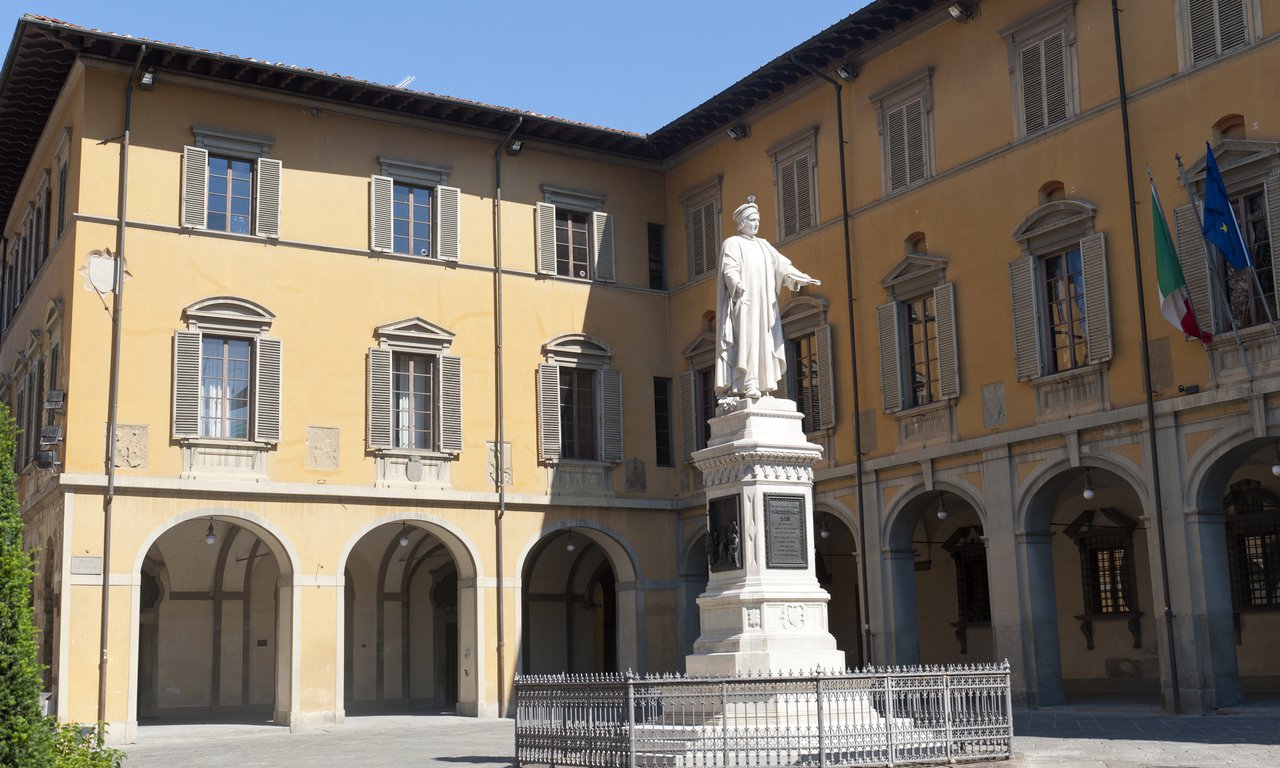
The Palazzo del Comune is a collection of buildings of different periods and styles. Overlooking the square of the same name, its homogenous appearance is the result of regularization work on a probable design by Giuseppe Valentini, dating to 1791. On the ground floor on the piazza we see a loggia of elliptical arches incorporating the 15th century doorway of the palace, which is decorated with the Council’s emblems and other crests.
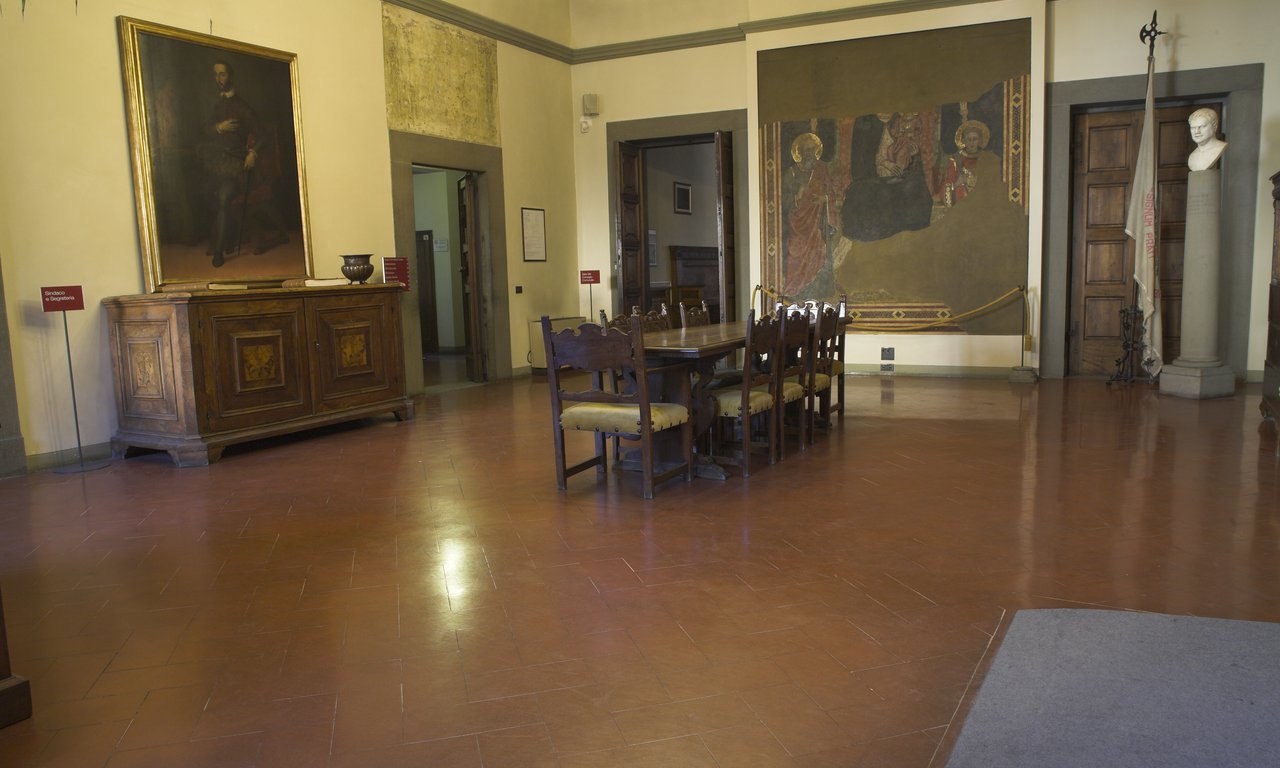
The oldest nucleus is made up of the Salone del Consiglio or Council Room, an exceptional room which has hosted the Council’s most important meetings for over seven centuries.
Other buildings were added at different times, namely the 13th century palazzo dei Marinari, the Manassei property, acquired by the Council between the 1300-1400s, and the Case dei Milanesi, which were purchased in 1562.
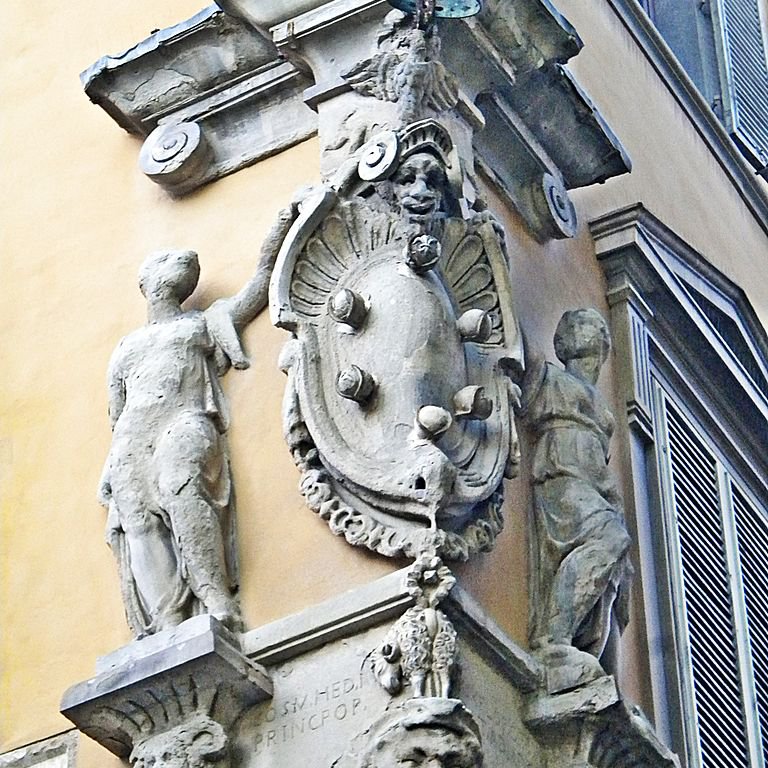
Ancient crests which had been removed in 1799 during the French occupation, have been repositioned between the windows, while a large Medici crest in sandstone by Battista del Tasso (1549-1550) marks the corner with Corso Mazzoni.
During the 1400s the ground floor of the shorter side was altered to incorporate butchers’ counters, the piazza and surrounding areas having always been used for the meat and corn markets.
Ever since the late 1600s, the upper floor of the short side, however, housed the Public Theatre, so-called ‘of the simple’, the first ‘public’ theatre in Tuscany, which was later demolished during the mid-1400s to make space for the Chancery.
The first floor is used as exhibition space for the Council Picture Gallery, which mainly exhibits portraits from the 1500s to 1900s.
The Palazzo del Comune is a collection of buildings of different periods and styles. Overlooking the square of the same name, its homogenous appearance is the result of regularization work on a probable design by Giuseppe Valentini, dating to 1791. On the ground floor on the piazza we see a loggia of elliptical arches incorporating the 15th century doorway of the palace, which is decorated with the Council’s emblems and other crests.
The oldest nucleus is made up of the Salone del Consiglio or Council Room, an exceptional room which has hosted the Council’s most important meetings for over seven centuries.
Other buildings were added at different times, namely the 13th century palazzo dei Marinari, the Manassei property, acquired by the Council between the 1300-1400s, and the Case dei Milanesi, which were purchased in 1562.
Ancient crests which had been removed in 1799 during the French occupation, have been repositioned between the windows, while a large Medici crest in sandstone by Battista del Tasso (1549-1550) marks the corner with Corso Mazzoni.
During the 1400s the ground floor of the shorter side was altered to incorporate butchers’ counters, the piazza and surrounding areas having always been used for the meat and corn markets.
Ever since the late 1600s, the upper floor of the short side, however, housed the Public Theatre, so-called ‘of the simple’, the first ‘public’ theatre in Tuscany, which was later demolished during the mid-1400s to make space for the Chancery.
The first floor is used as exhibition space for the Council Picture Gallery, which mainly exhibits portraits from the 1500s to 1900s.