The Museo dell’Opera del Duomo was founded in 1967 for the purpose of housing works of art originally in the Duomo and subsequently from the entire Diocese. The museum display unfolds along some of the rooms of the ancient Palazzo dei Proposti, finishing in the frescoed ‘vaults’ beneath the Cathedral.
In the first room we see a 13th century relief by Giroldo da Como, originally from Montepulciano, while the Cintola room includes a recomposition of the 14th century pulpit, which is earlier than the one by Donatello and Michelozzo.
In the basement level we can see an archeological area, whose excavation has enabled the recovery of ceramic remains spanning from the Etruscan era up to the 15th century, as well as a section of the city walls dating to the 12th century.
The Renaissance Room houses various masterpieces, such as the panel depicting the funeral rights of Saint Gerome, executed by Filippo Lippi for the Duomo and dating to circa 1455-1460, and another depicting the Madonna and Child with Saints, by the Maestro della Natività di Castello, originally from Faltugnano.
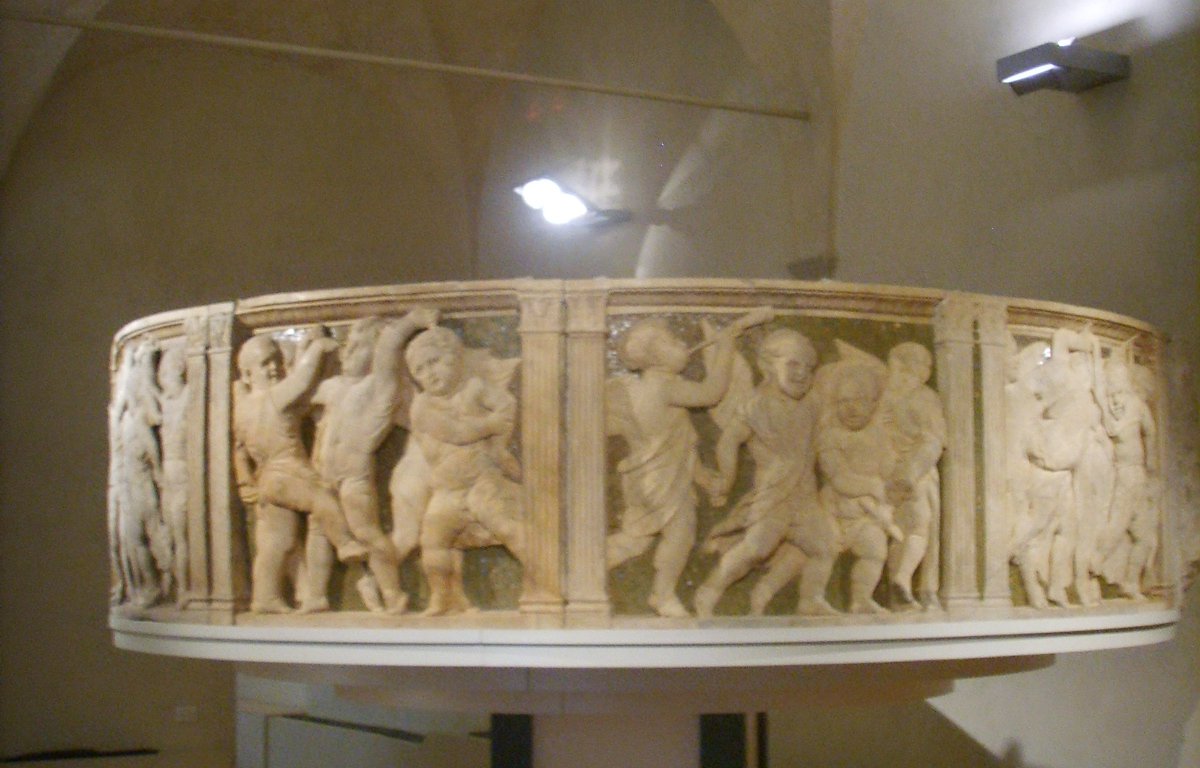
The original parapet and the bronze capital of the external pulpit of the Duomo, by Donatello and Michelozzo, are absolute masterpieces.
In the room devoted to the 17th century are various canvases originating from the Cathedral, including a Martyrdom of Saint Lawrence of 1666-68, which was begun by Mario Balassi and completed by Carlo Dolci, who was also responsible for the depiction of the Guardian Angel, and the intense Saint Peter of Alcàntara giving communion to Saint Teresa of Avila, by Livio Mehus of 1683.
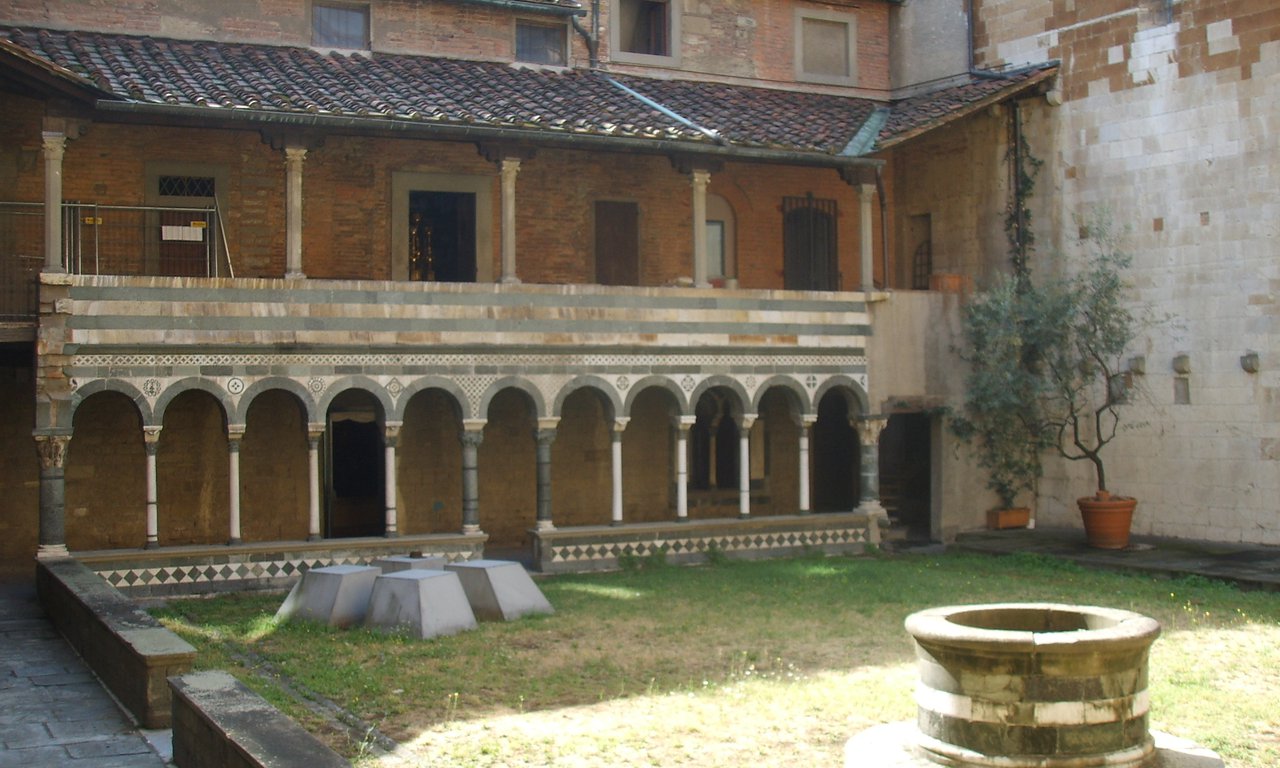
The Romanesque cloister, with its three capitals attributed to the Master of Cabestany, is also part of the museum route.
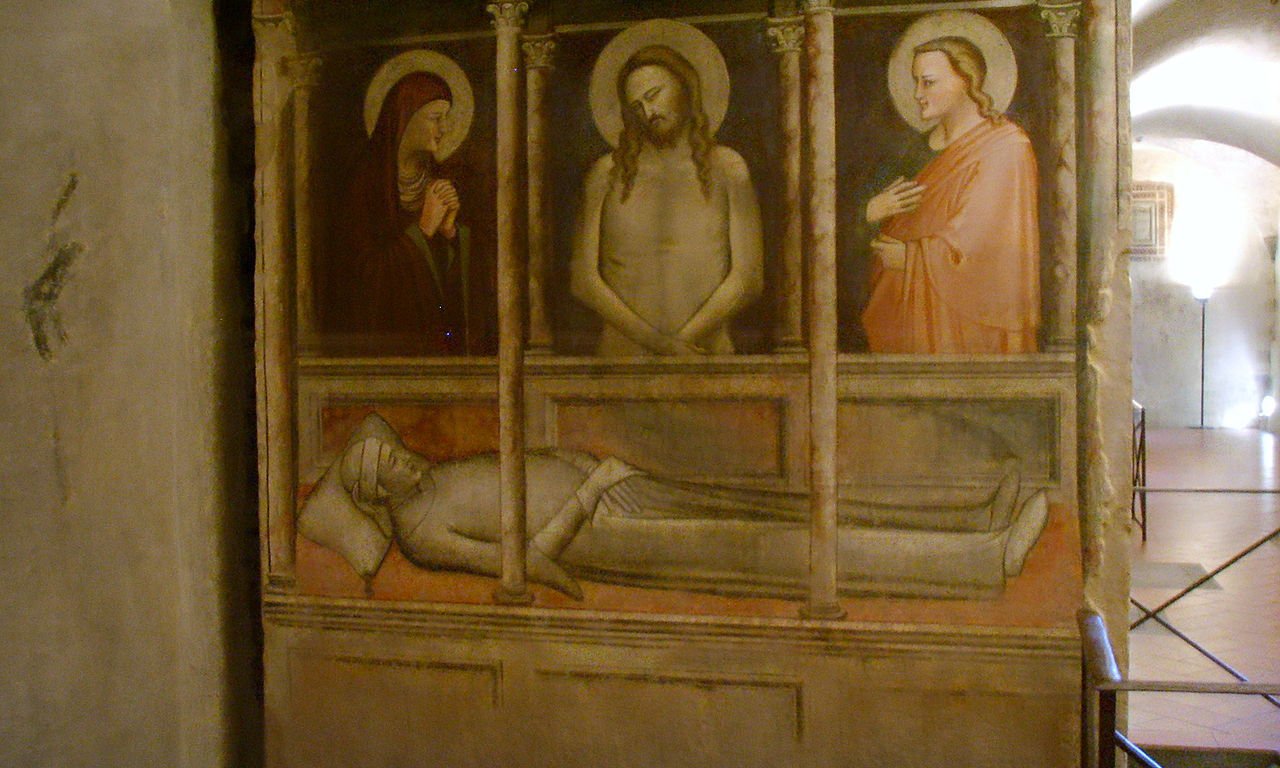
Once beyond the sepulchral Migliorati chapel and the Antiquarium, which includes findings from excavations undertaken in the church’s surroundings in 1970, the display route finishes with the ‘vaults’, a vast 14th century area which was used as burial ground until the 18th century, and the chapel of Saint Stephen.
The Museo dell’Opera del Duomo was founded in 1967 for the purpose of housing works of art originally in the Duomo and subsequently from the entire Diocese. The museum display unfolds along some of the rooms of the ancient Palazzo dei Proposti, finishing in the frescoed ‘vaults’ beneath the Cathedral.
In the first room we see a 13th century relief by Giroldo da Como, originally from Montepulciano, while the Cintola room includes a recomposition of the 14th century pulpit, which is earlier than the one by Donatello and Michelozzo.
In the basement level we can see an archeological area, whose excavation has enabled the recovery of ceramic remains spanning from the Etruscan era up to the 15th century, as well as a section of the city walls dating to the 12th century.
The Renaissance Room houses various masterpieces, such as the panel depicting the funeral rights of Saint Gerome, executed by Filippo Lippi for the Duomo and dating to circa 1455-1460, and another depicting the Madonna and Child with Saints, by the Maestro della Natività di Castello, originally from Faltugnano.
The original parapet and the bronze capital of the external pulpit of the Duomo, by Donatello and Michelozzo, are absolute masterpieces.
In the room devoted to the 17th century are various canvases originating from the Cathedral, including a Martyrdom of Saint Lawrence of 1666-68, which was begun by Mario Balassi and completed by Carlo Dolci, who was also responsible for the depiction of the Guardian Angel, and the intense Saint Peter of Alcàntara giving communion to Saint Teresa of Avila, by Livio Mehus of 1683.
The Romanesque cloister, with its three capitals attributed to the Master of Cabestany, is also part of the museum route.
Once beyond the sepulchral Migliorati chapel and the Antiquarium, which includes findings from excavations undertaken in the church’s surroundings in 1970, the display route finishes with the ‘vaults’, a vast 14th century area which was used as burial ground until the 18th century, and the chapel of Saint Stephen.