The female Dominican monastery of San Vincenzo was founded in 1503 by a group of tertiaries lead by the Friars of San Domenico. The complex acquired its double title in 1746, following the canonization of Caterina de’ Ricci, who lived and died here.
The saint had joined the monastery aged thirteen, spiritualising and enlarging it considerably, also thanks to the generosity of her spiritual son, Filippo Salviati.
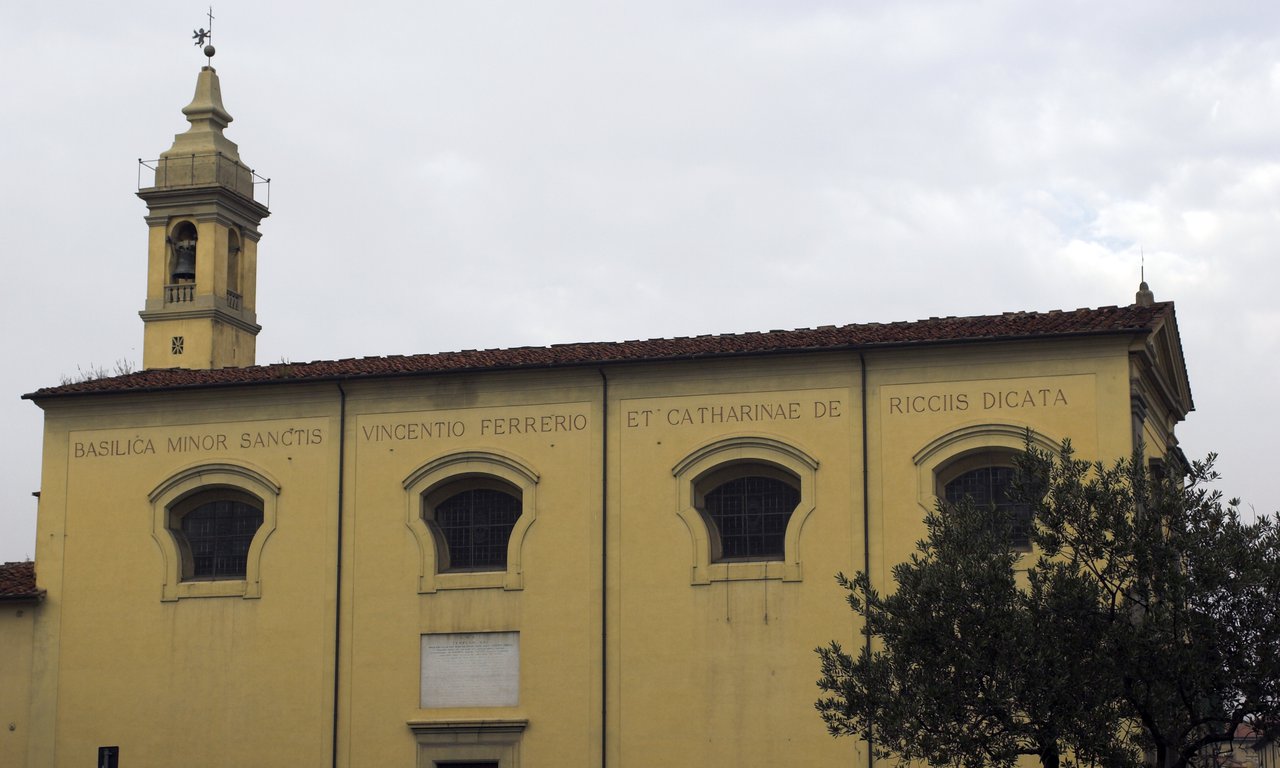
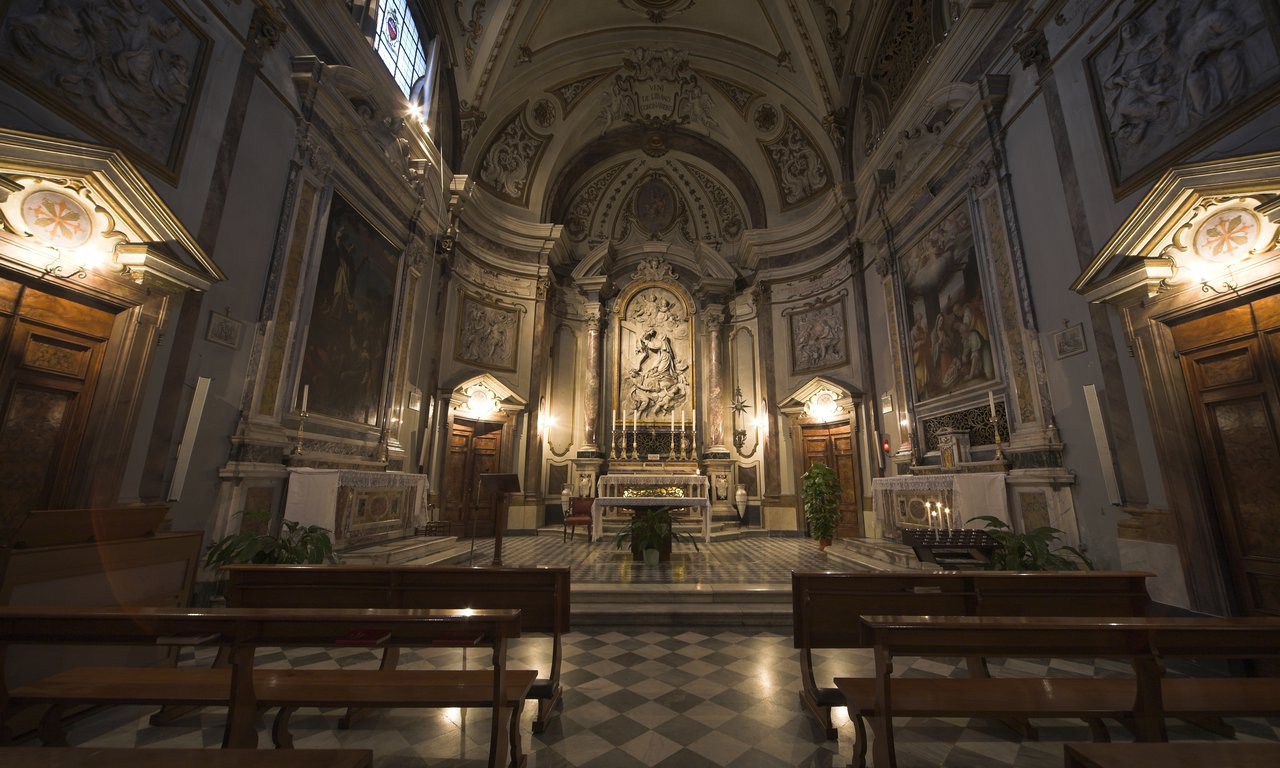
The church, which was completed in 1512, was rebuilt between 1732 and 1735, in view of the nun’s beatification. The building is startling by virtue of the considerable contrast between the simplicity of its exterior and the lavish richness of its interior decoration, making it one of the most salient examples of late Baroque culture.
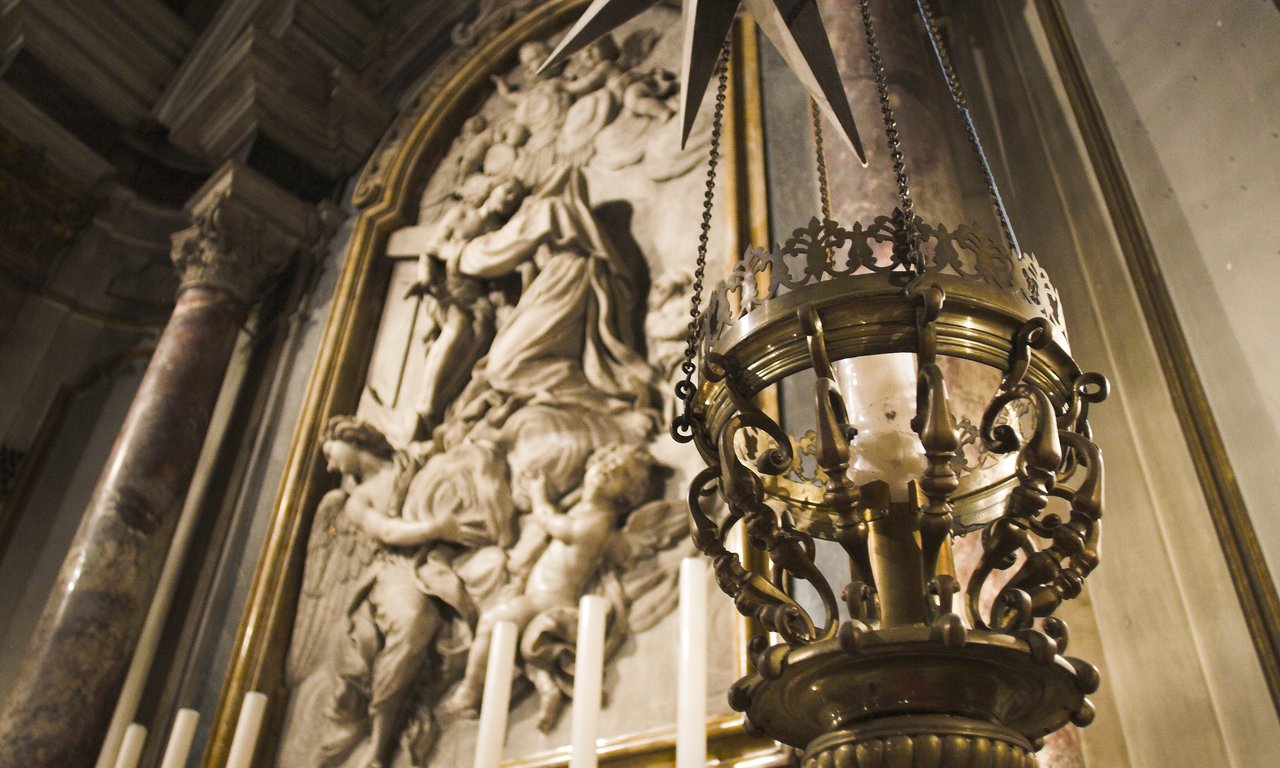
Of the works of art contained within it, it is worth noting a 15th century marble relief of the Madonna and Child, by Matteo Civitali and the Miracle of the Embrace of the Crucified, by Girolamo Ticciati.
The elegant marble altars house a beautiful Martyrdom of Saint Catherine of Alexandria by Vincenzo Meucci, a 16th century Nativity by Michele delle Colombe and paintings by Giovanni Antonio Pucci.
Adjacent to the church is the Cloistered Monastery, which was founded in 1503. Salient features include the chapel of the Madonna dei Papalini, the original burial place of Santa Caterina’s body, and an early 16th century majolica bust used as an object of veneration. The chapel houses a beautiful painting of the Madonna and Child appearing to Saint Giacinto, attributed to Santi di Tito.
The choir, which was commissioned by Filippo Salviati, houses the 16th century wooden furnishings and impressive paintings by Michele delle Colombe, Simone Pignoni and Lorenzo Lippi.
The female Dominican monastery of San Vincenzo was founded in 1503 by a group of tertiaries lead by the Friars of San Domenico. The complex acquired its double title in 1746, following the canonization of Caterina de’ Ricci, who lived and died here.
The saint had joined the monastery aged thirteen, spiritualising and enlarging it considerably, also thanks to the generosity of her spiritual son, Filippo Salviati.
The church, which was completed in 1512, was rebuilt between 1732 and 1735, in view of the nun’s beatification. The building is startling by virtue of the considerable contrast between the simplicity of its exterior and the lavish richness of its interior decoration, making it one of the most salient examples of late Baroque culture.
Of the works of art contained within it, it is worth noting a 15th century marble relief of the Madonna and Child, by Matteo Civitali and the Miracle of the Embrace of the Crucified, by Girolamo Ticciati.
The elegant marble altars house a beautiful Martyrdom of Saint Catherine of Alexandria by Vincenzo Meucci, a 16th century Nativity by Michele delle Colombe and paintings by Giovanni Antonio Pucci.
Adjacent to the church is the Cloistered Monastery, which was founded in 1503. Salient features include the chapel of the Madonna dei Papalini, the original burial place of Santa Caterina’s body, and an early 16th century majolica bust used as an object of veneration. The chapel houses a beautiful painting of the Madonna and Child appearing to Saint Giacinto, attributed to Santi di Tito.
The choir, which was commissioned by Filippo Salviati, houses the 16th century wooden furnishings and impressive paintings by Michele delle Colombe, Simone Pignoni and Lorenzo Lippi.